
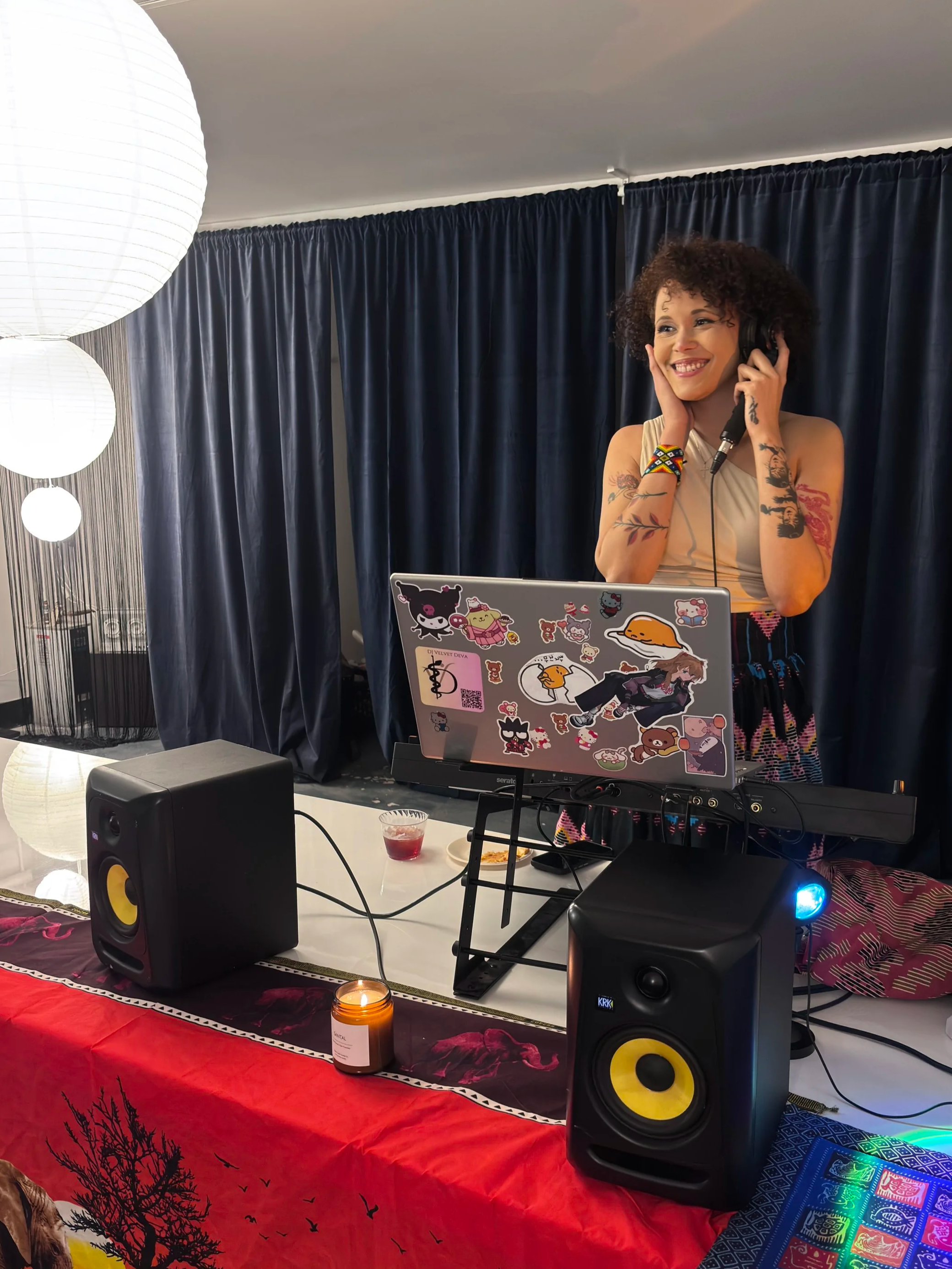
AUTUMN 2026 EVENT
An Evening of Music from Zimbabwe + Southern Africa by DJ Velvet Deva
November 6, 2026, 7:15-9:30p
FROM DJ VELVET DEVA
A benefit listening evening centered on deep listening, heritage, and care for children. Curated as one intentional experience, the evening gathered music from Zimbabwe and Southern Africa, a talk by Dr. Privilege Chadwick about her child protection work, and a room designed as a Southern African sunset brought indoors. A diverse group of guests came to slow down, listen, and talk, and together we raised $400 toward a six-bedroom shelter for 15 girls in Mashonaland West, Zimbabwe.
The following reflection by DJ Velvet Deva explains the concept behind the room and the inspirations behind the music selected for the evening, tracing the sounds, histories, and movements that informed the listening experience.
Listening as a Way to Bring More Light
This evening began with a single image: a Southern African sunset brought indoors. Michelle opened her space for a benefit supporting the safeguarding project my family started in Zimbabwe, and I wanted every part of the room to belong to that one idea. The flowers, the lights, the candle, the tea, and the music were all chosen together as parts of one concept, so that nothing in the room was incidental.
The flowers set the palette. Burgundy carnations, deep red chrysanthemums, orange and red roses, rust pom chrysanthemums, golden sunflowers, and soft pink and cream blooms sat against silver-green eucalyptus, white hydrangea, and baby’s breath. Their native homes cross the world. Carnations are thought to come from the Mediterranean, chrysanthemums from East Asia, most wild roses from Asia, sunflowers from North America, and eucalyptus from Australia. One of them, the protea, belongs to Southern Africa, where the king protea is the national flower.
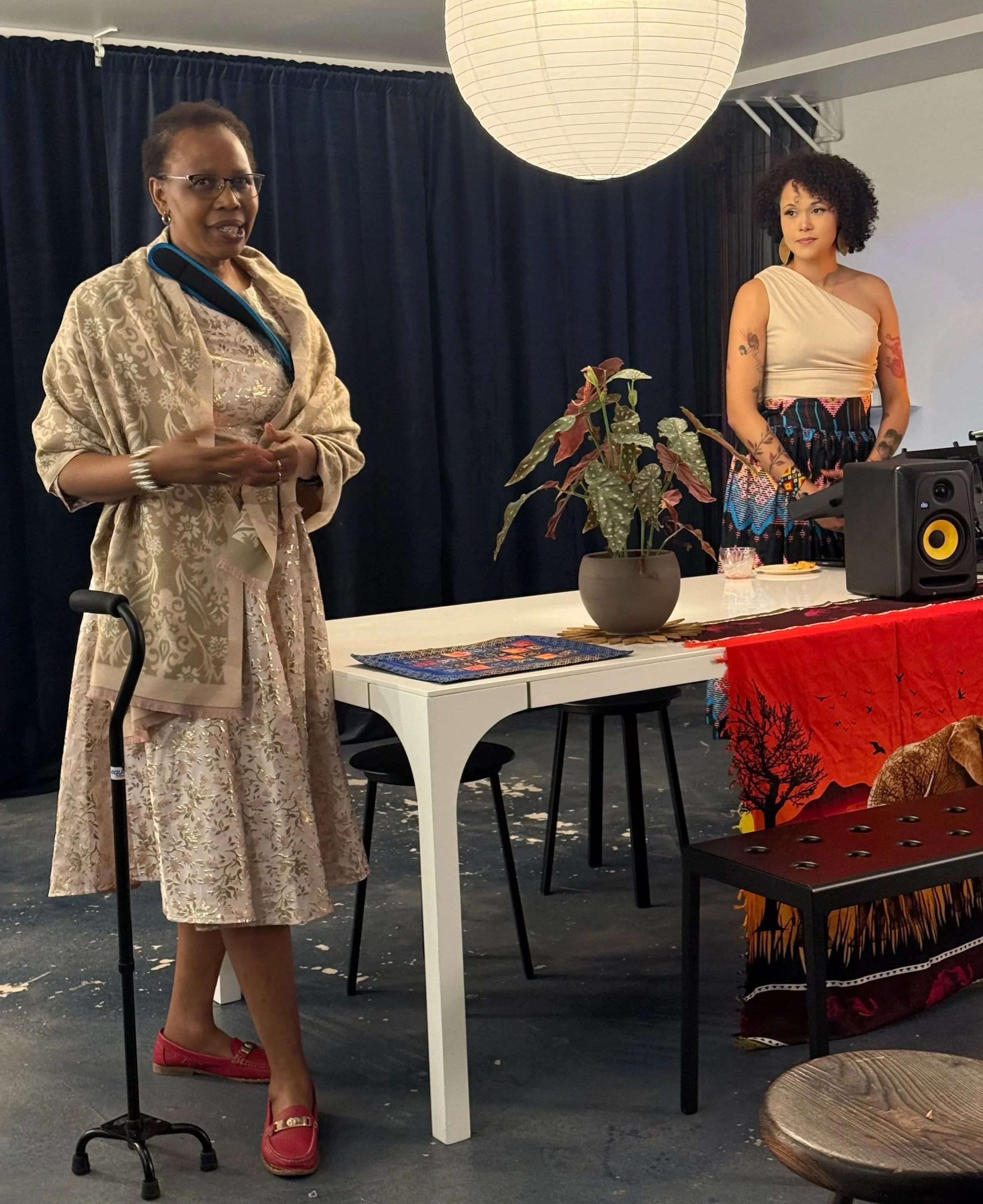
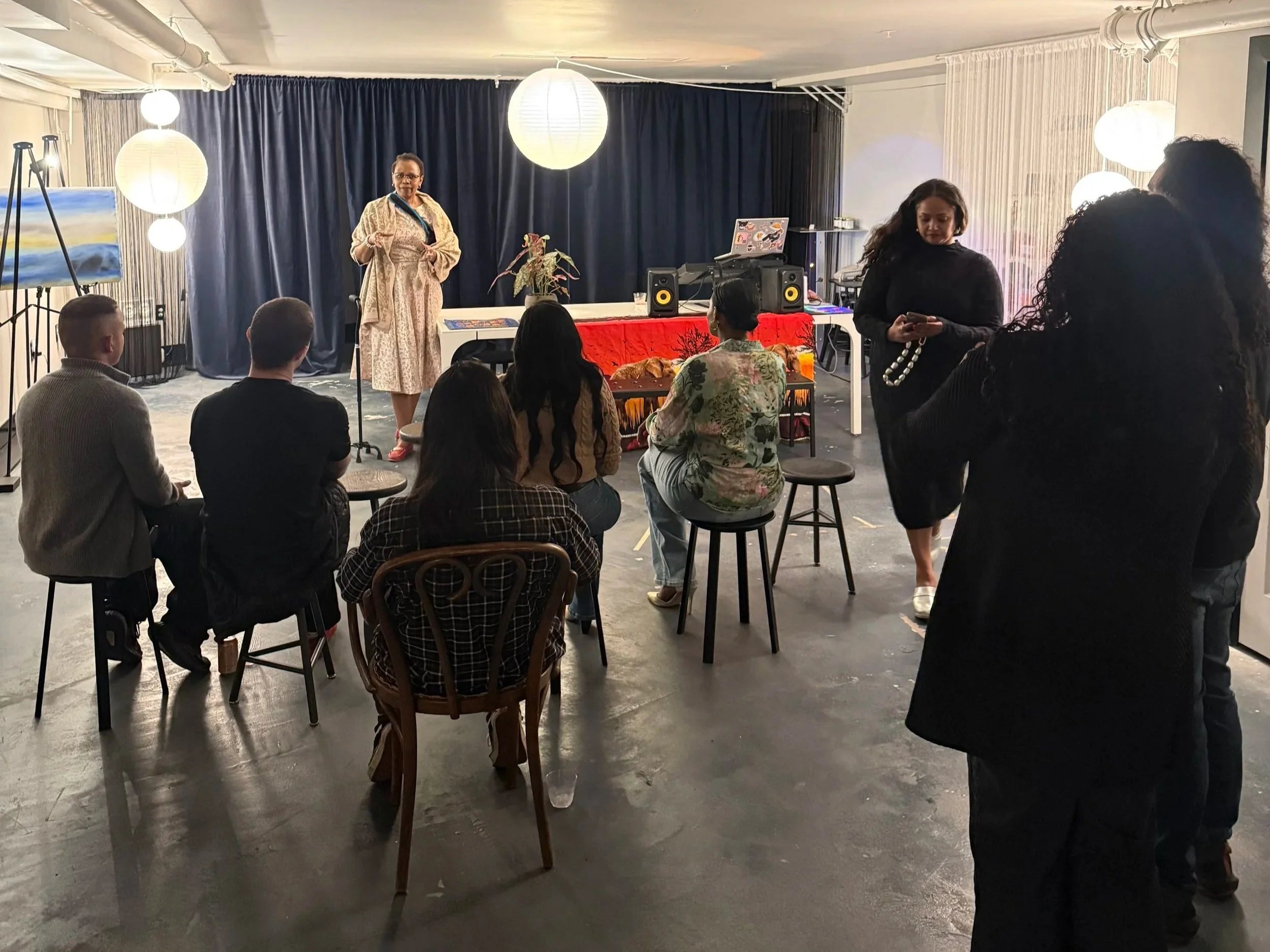
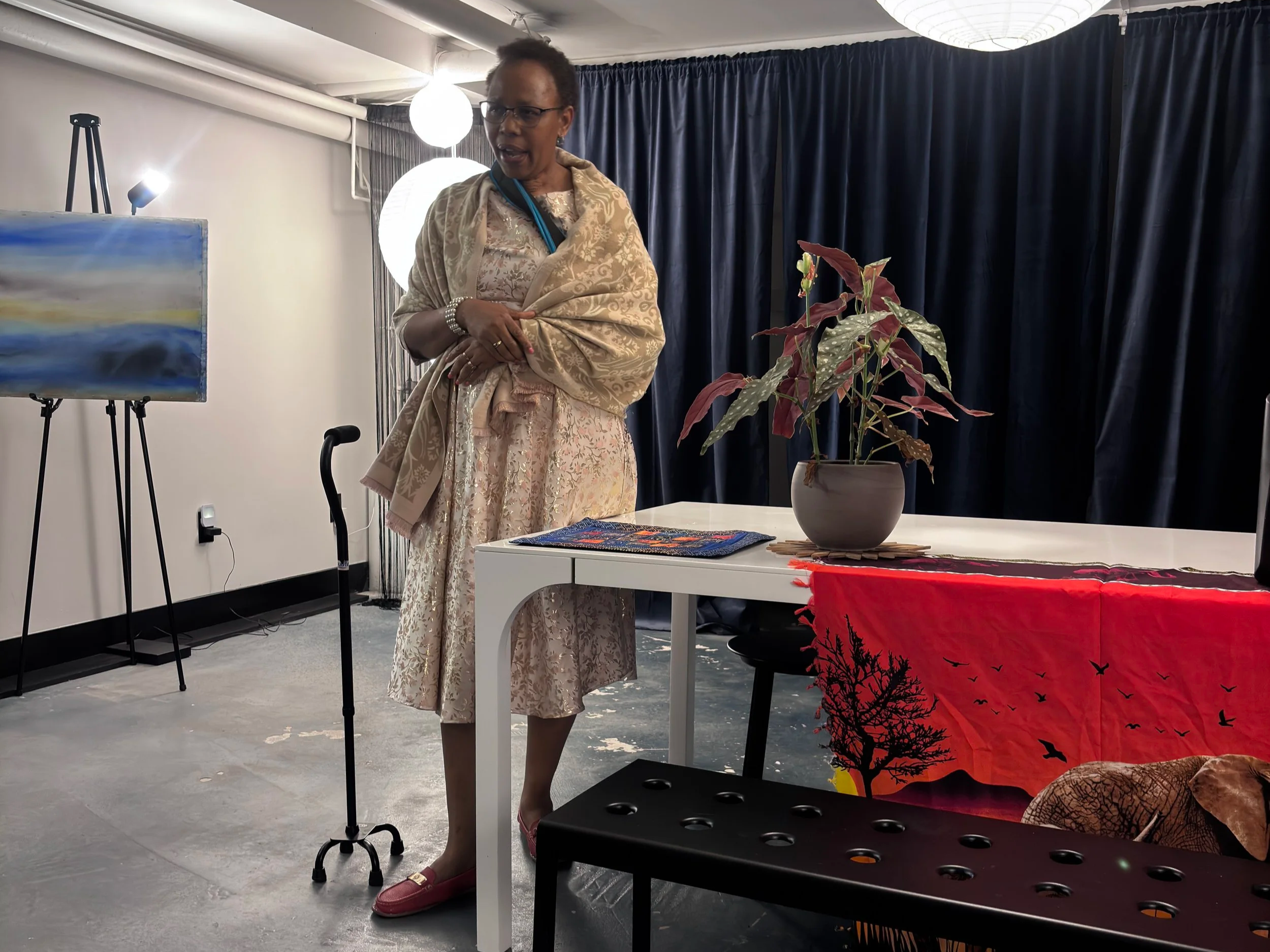
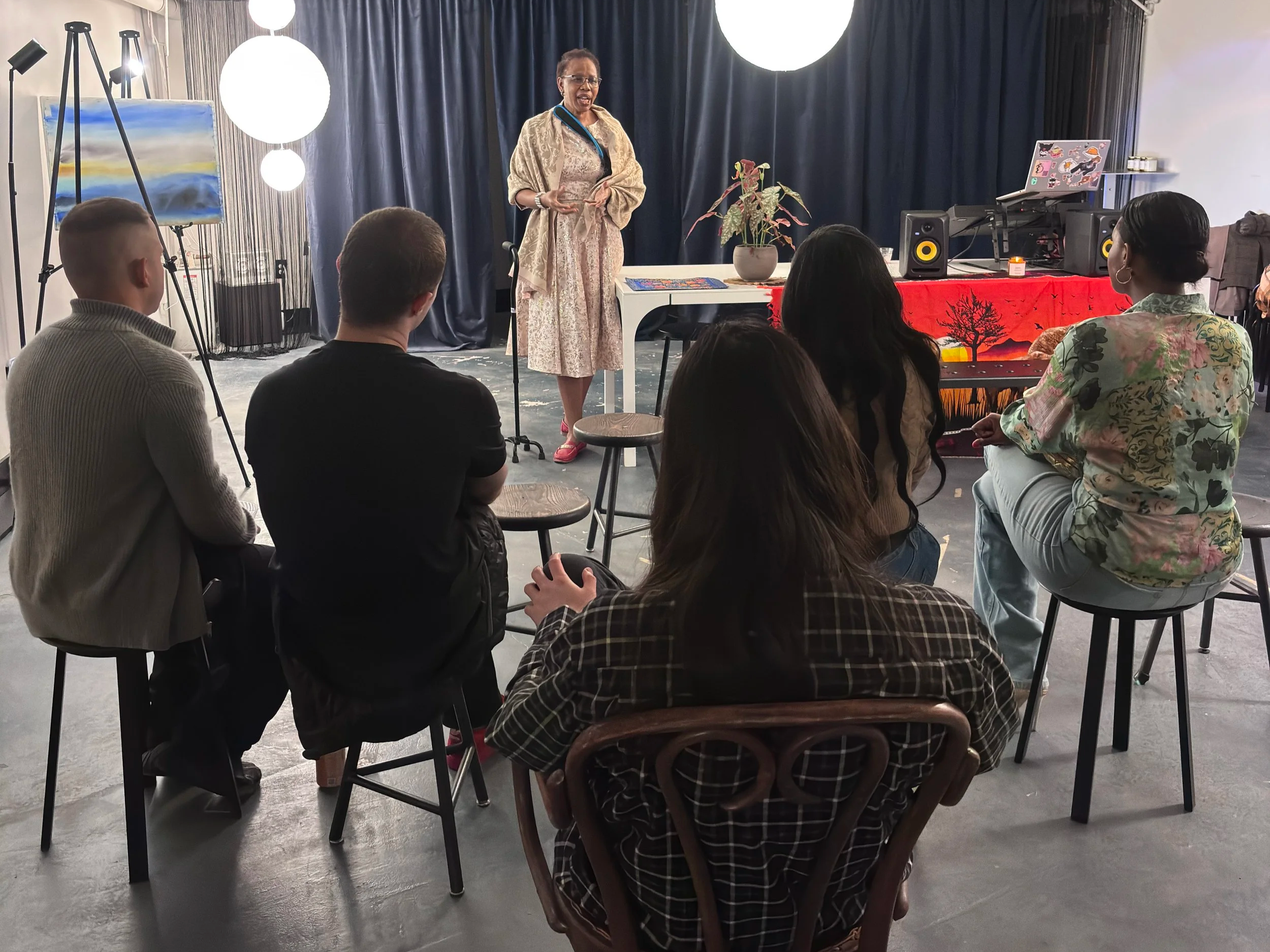
Dr. Chadwick speaking to the guests
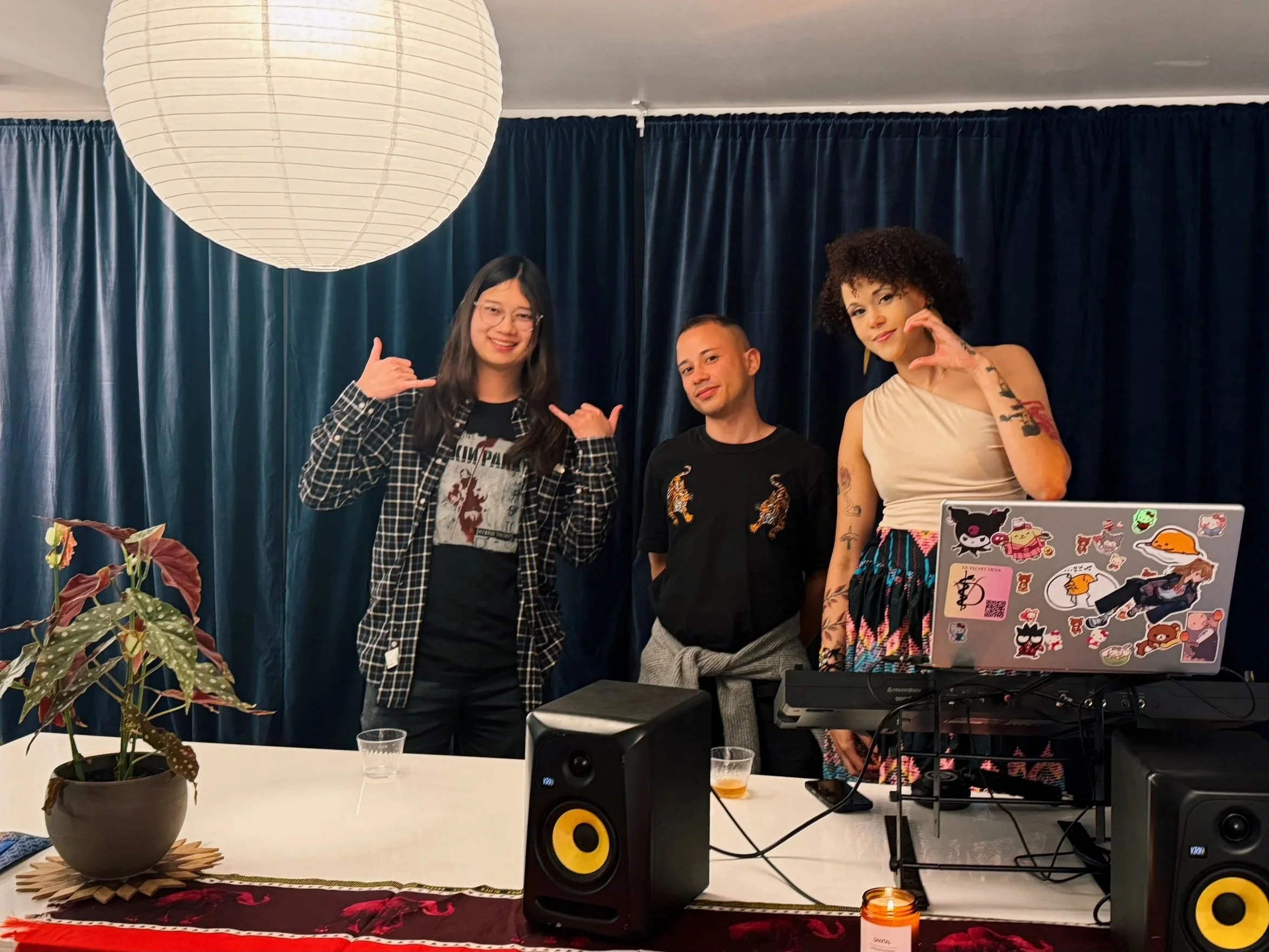
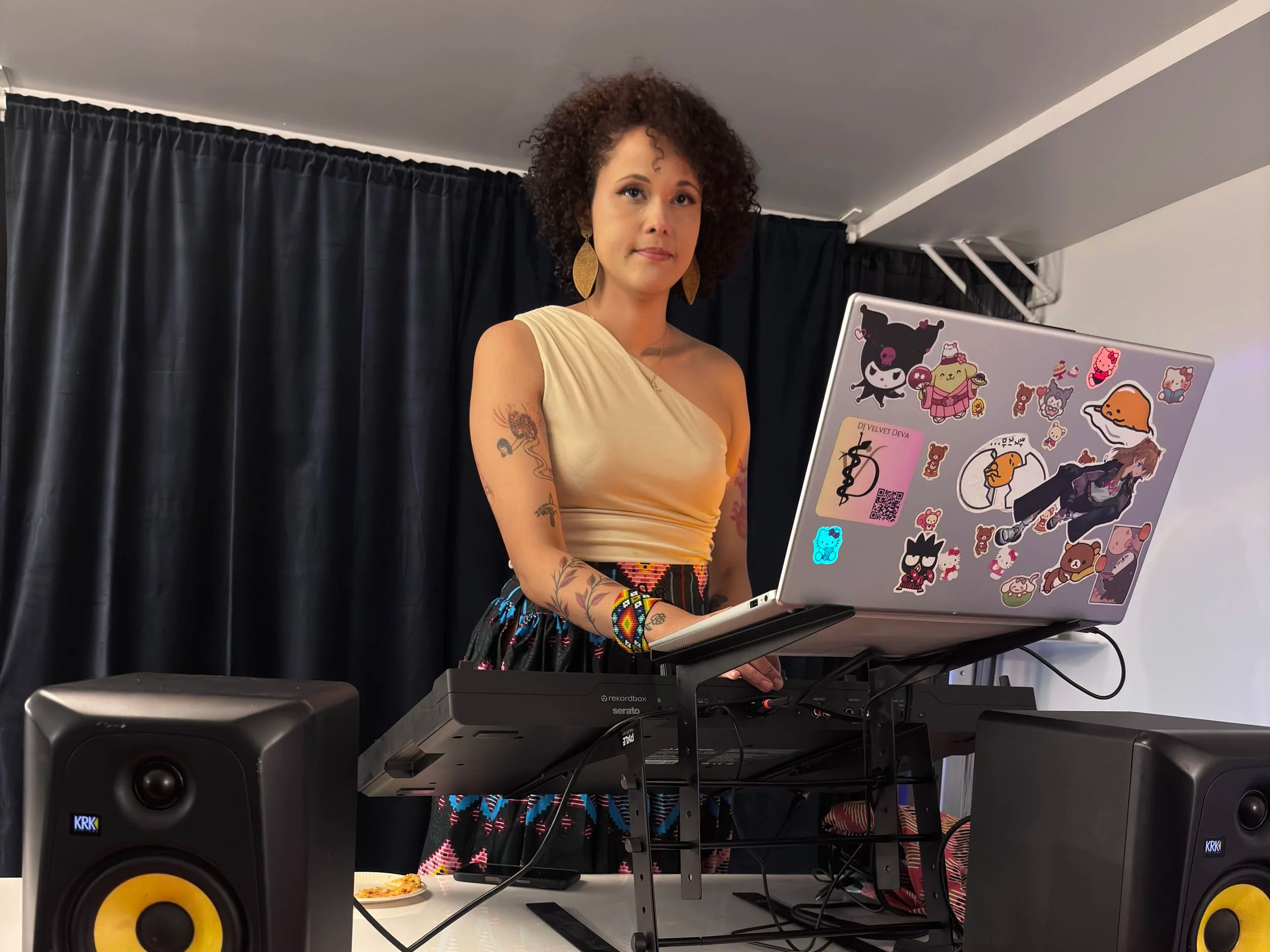
The lighting carried the same colors. Colored lamps washed the walls in warm and violet light and cast a soft rainbow arc, and a single candle burned between the speakers. Paper lanterns and a blue velvet backdrop pulled the room into a dim, warm glow, so the evening felt like dusk. A savanna cloth showing elephants walking into a setting sun covered the DJ table, and animal-print placemats ran the length of the refreshment table.
The tea belonged to the same concept. We served Stella Tea, a Zimbabwean tea from Tanganda Tea Company, cold brewed at home and poured over ice, alongside pastries, cookies, and a savory spread. Tea gives people a reason to slow down, sit, and talk, and the evening was meant to do the same.
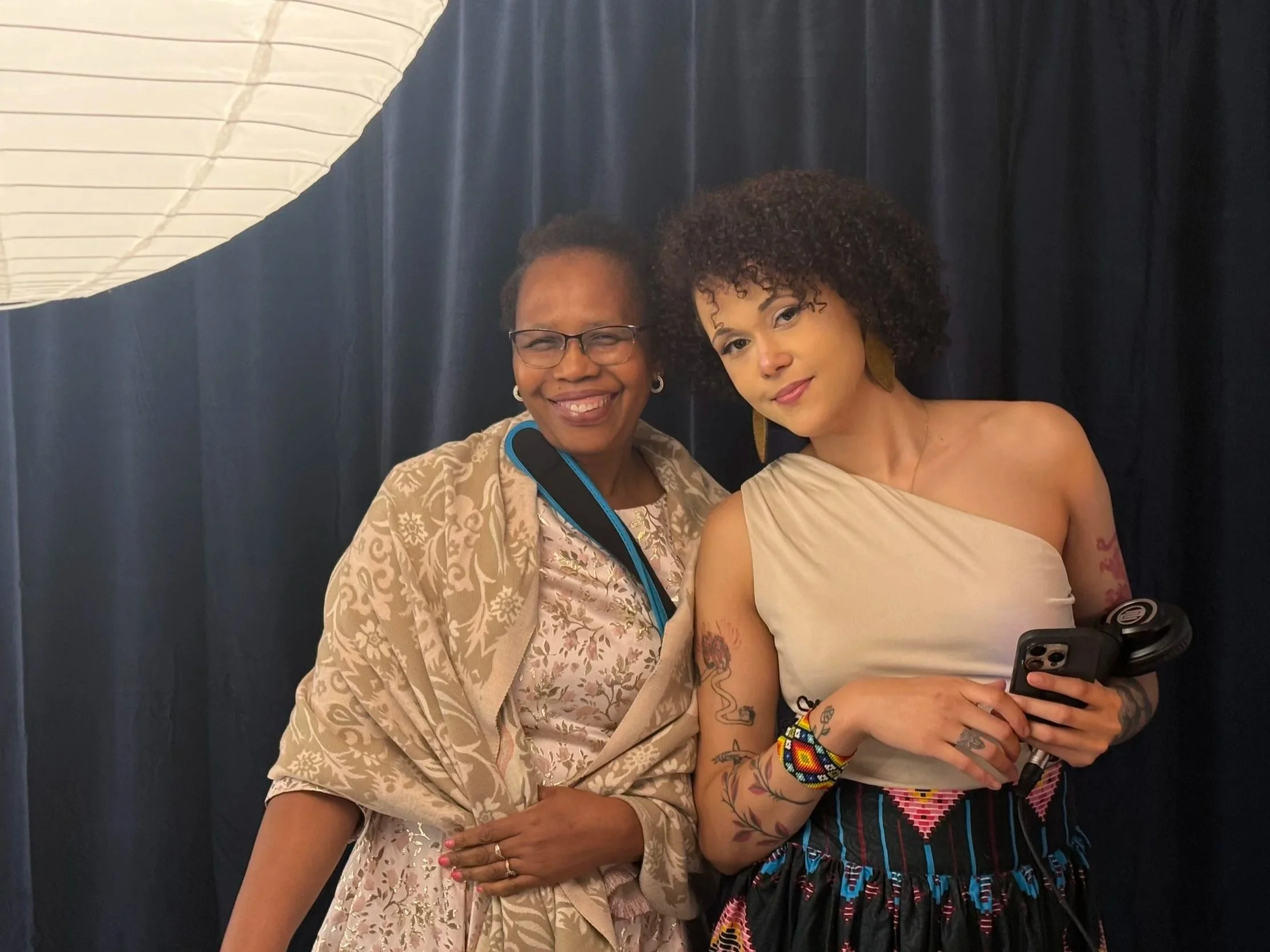
During the evening, my mother, Dr. Privilege Chadwick, spoke about what inspired her project, why she started it, and how she is moving it forward. The Safeguarding Children project began with our family, with help from Rotary International and The Salvation Army, and has completed six tours across all provinces of Zimbabwe. We hope to expand into South Africa and neighboring countries.
The music carried the same story. The first set moved through Zimbabwe and Southern Africa, and as the night went on it moved toward amapiano and Afrobeats. I am half Zimbabwean and half British, and curating music from Zimbabwe for a room of people from many backgrounds was a way to bring those histories together. Several of the artists carry a great deal of history.
Oliver “Tuku” Mtukudzi (1952 to 2019) became known in the 1970s as a voice of the struggle against white-minority rule in Zimbabwe. His songs carried social messages about HIV/AIDS and coded political commentary. His “Tuku music” blended mbira, mbaqanga, jit, and Korekore drumming, and it reached a wider international audience with the 1999 album Tuku Music. He toured the United Kingdom, the United States, and Canada. In “Neria,” he described how a widow’s rights are trampled and urged her not to lose heart. UNICEF named him a Regional Goodwill Ambassador for Eastern and Southern Africa in 2011 for his work on children’s rights, and he was declared a National Hero after his death in January 2019.
Thomas Mapfumo built chimurenga, a sound that was also a political argument. He created it in the 1970s during the struggle against white-minority rule, and the name comes from the Shona word for struggle. In 1977 he was jailed for three months after “Hokoya.” Both the Rhodesian and the Mugabe governments banned his music. After his 1989 album Corruption criticized Mugabe, he went into exile in Oregon. He performed at New York’s Central Park SummerStage in 1992, and Banning Eyre’s biography Lion Songs compares his role to those of Fela Kuti and Bob Marley.
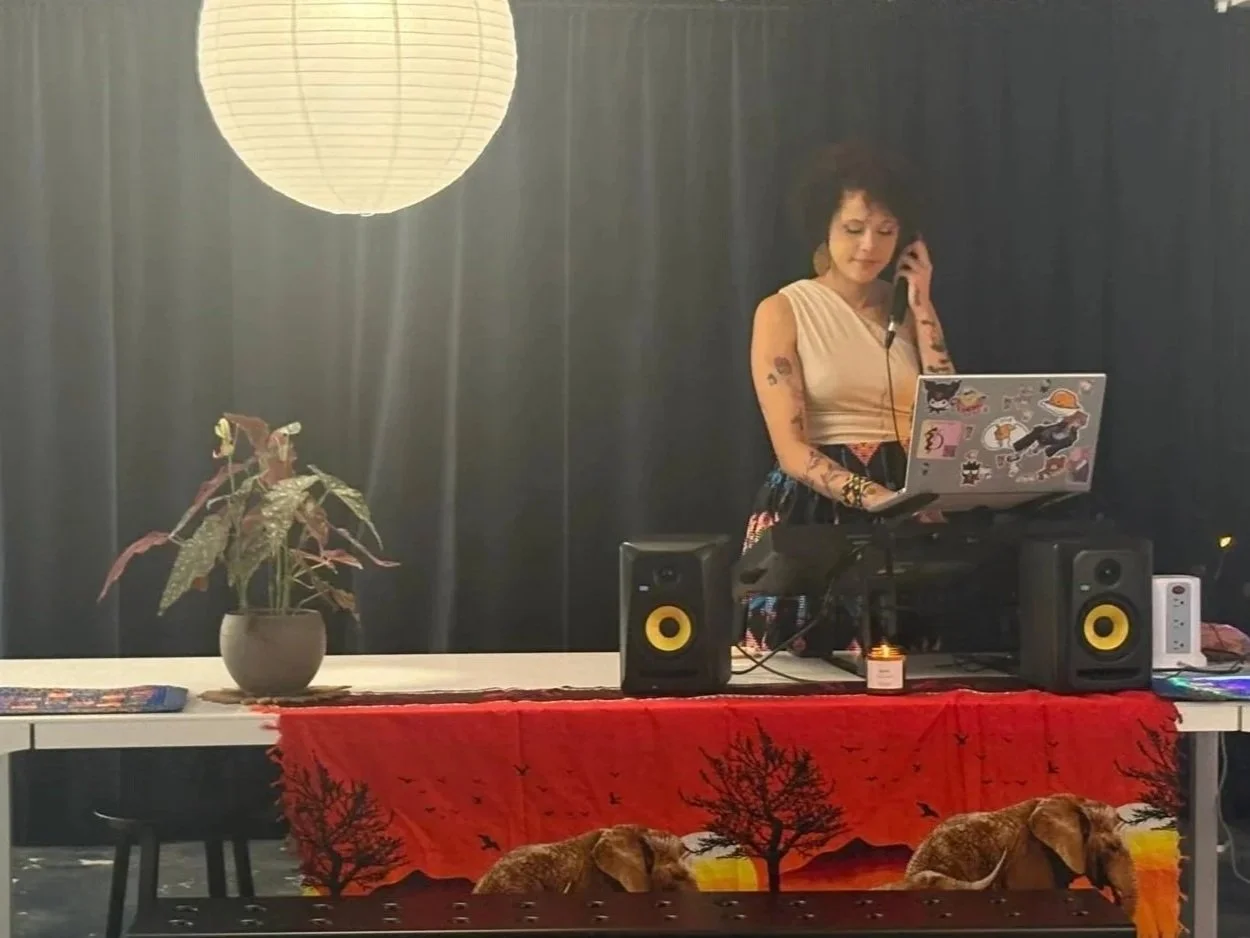
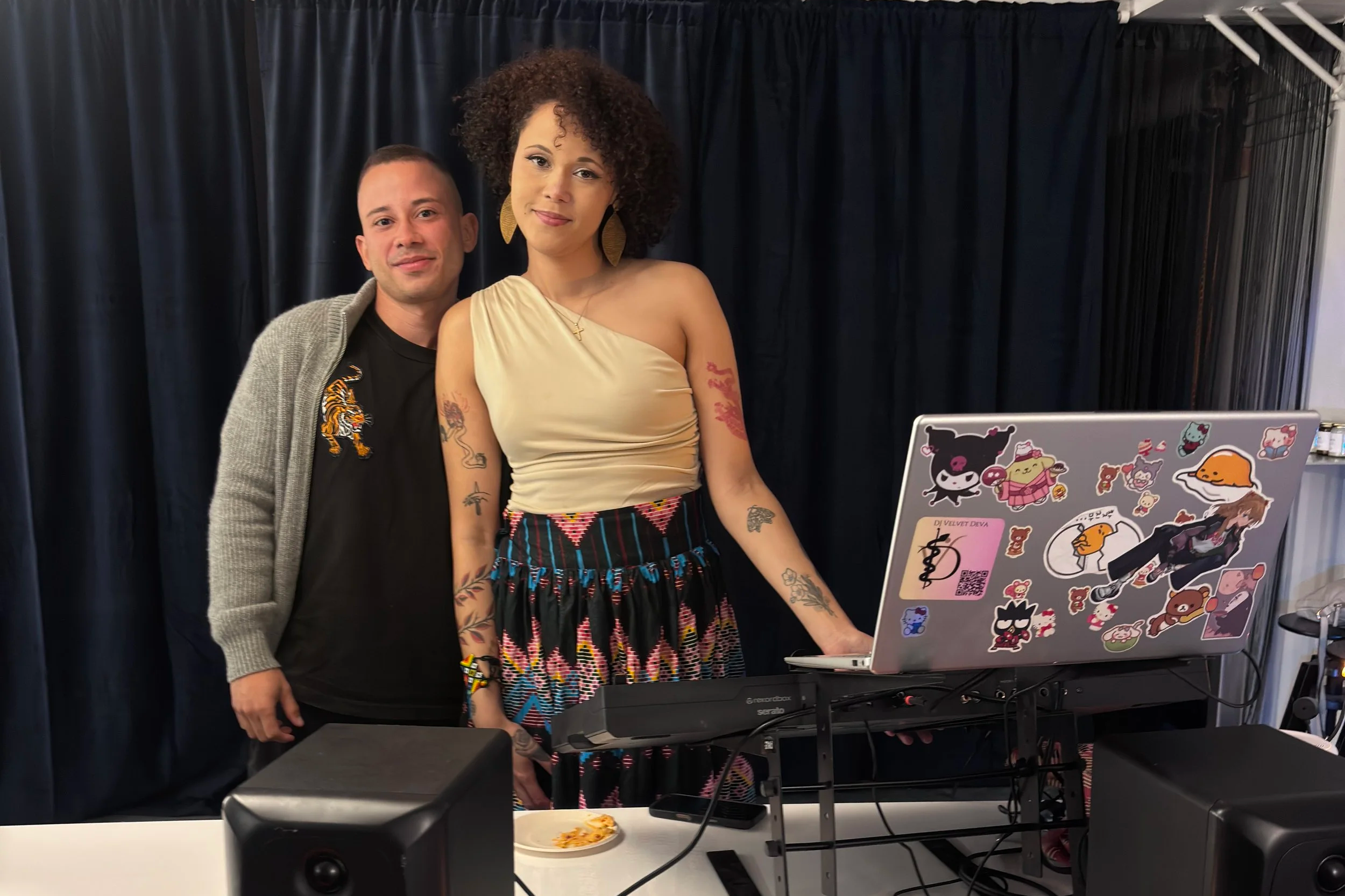
DJ Velvet Deva at the decks
Alick Macheso, born in 1968, is often called the King of Sungura, a guitar-driven Zimbabwean dance music. He was born in Shamva, north of Harare, to parents of Malawian origin, and he sings in Shona, Chichewa, Sena, Venda, and Lingala. He became known as a bassist, singer, and dancer with the Khiama Boys in the 1990s, formed his own band, Orchestra Mberikwazvo, in 1997, and released his first solo album, Magariro, in 1998. The band is nicknamed the Band of the People, and he is seen as the workingman’s hero and, since Tuku’s death, the Harare scene’s most obvious father figure. His 2000 album Simbaradzo is reported to be the best-selling album in Zimbabwe’s history. He won Song of the Year for “Madhawu” in 2003 and Best Live Performer at the Zimbabwe Music Awards in 2004 and 2005, and in 2013 he became a Zimbabwe Red Cross ambassador.
The newer sound in the set was amapiano, which started in South Africa’s townships in the 2010s. Tyler ICU’s “Mnike” topped charts around the world, and Tyla won the first Grammy for Best African Music Performance in February 2024 for “Water,” her first US Top 10 hit. One South African scholar says people abroad now link South Africa to amapiano more than to Mandela. Awilo Longomba, Wizkid, Rema, Tiwa Savage, Yemi Alade, P-Square, Tems, and Leonard Dembo also shared the night, and the full set list follows below.
Together we raised $400 toward the six-bedroom shelter. The plan for the money is $200 for 8,000 bricks, $100 for 8 bags of cement, $50 for 2 window frames, and $50 for 2 door frames. Thank you to everyone who came, to Michelle for opening the gallery, and to everyone who gave.
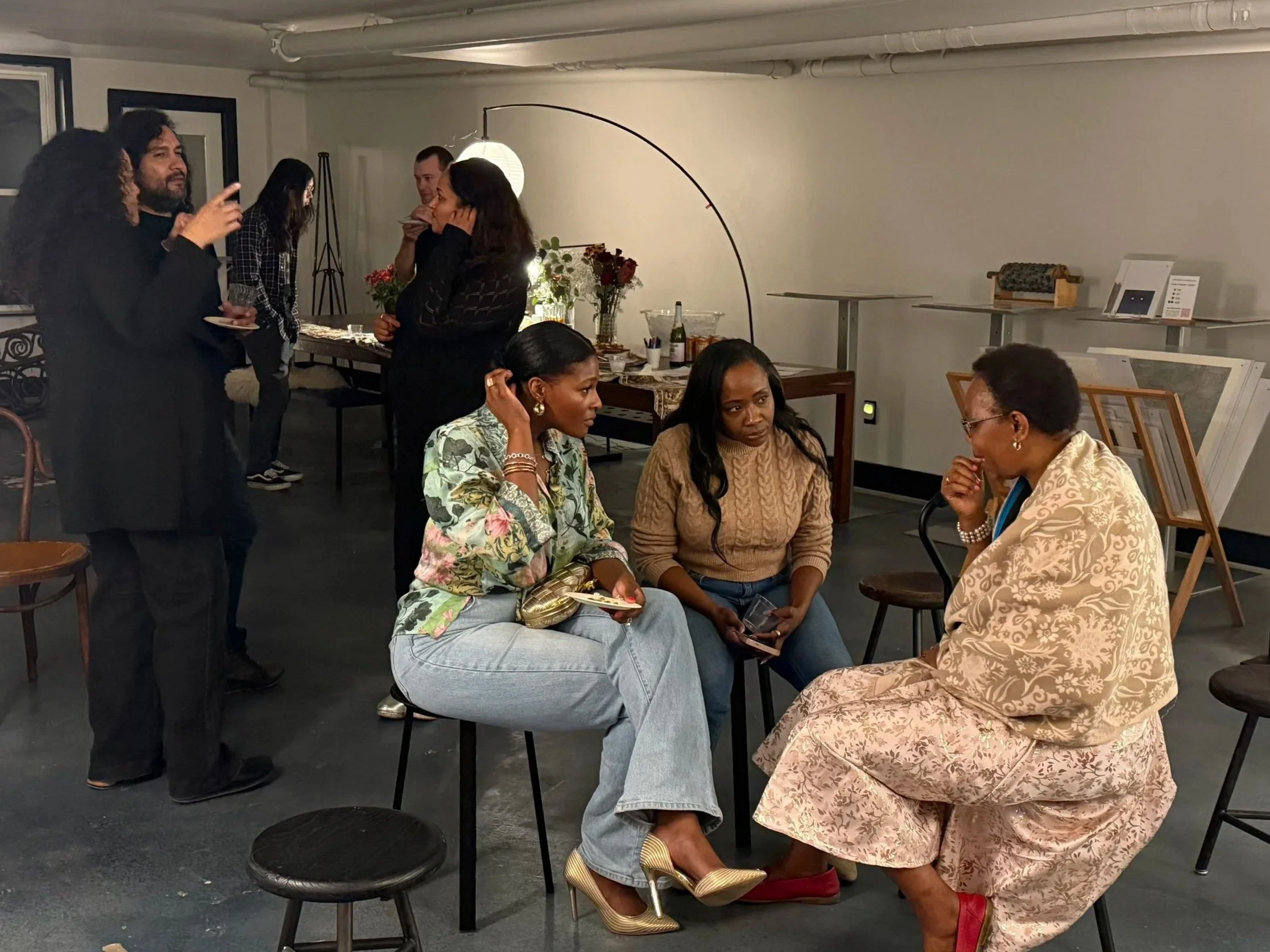
A diverse group of people came, and everyone mingled. Music, tea, flowers, and light gave strangers an easy way into conversation, which was the point: to listen together, and to bring a little more light to the children this work protects.
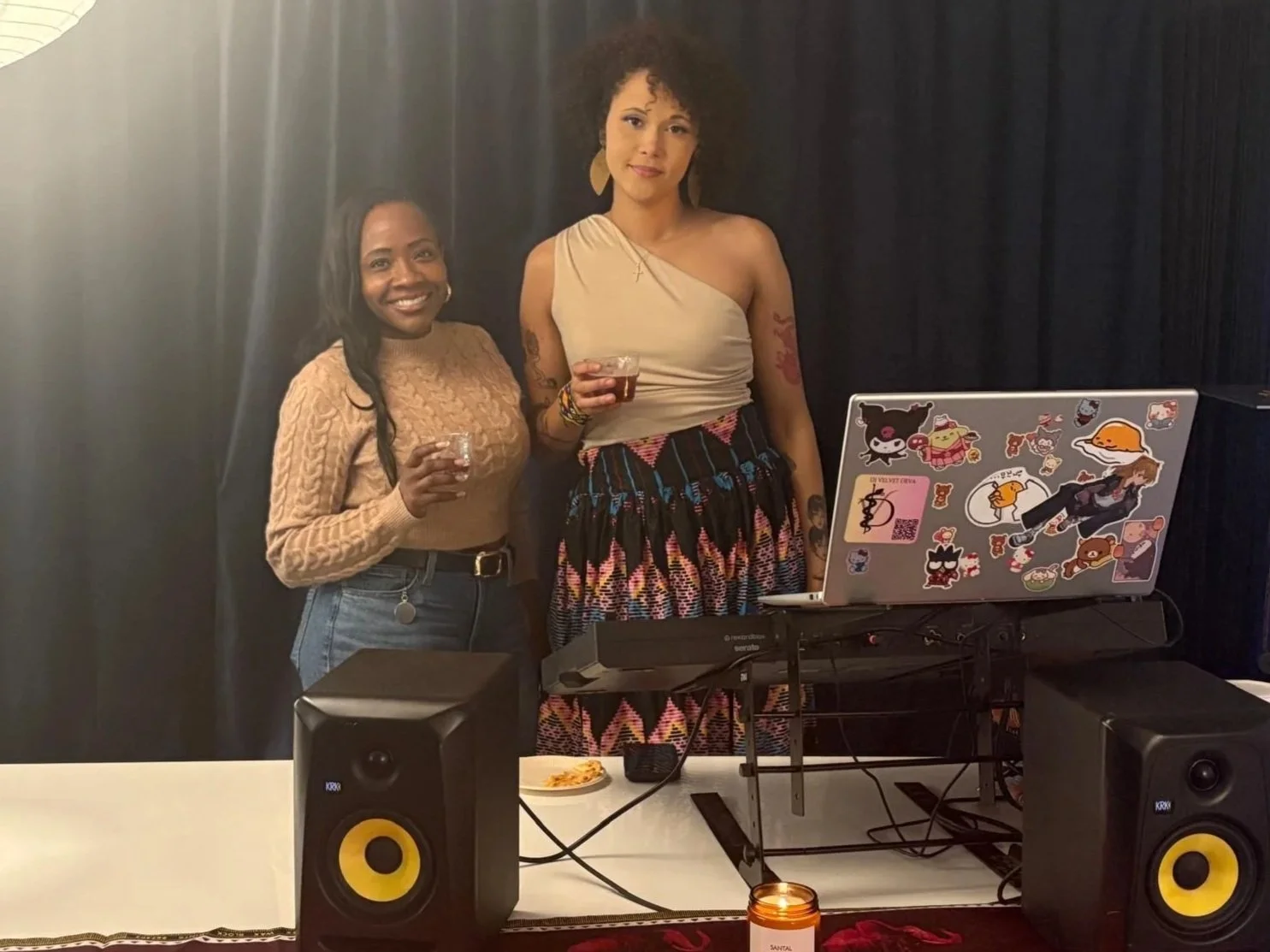
For Additional Reading and Listening
Brenda Fassie (South Africa): “Weekend Special” (1983) was the fastest-selling record of its time, Time magazine called her the Madonna of the Townships in 2001, and her 1990 song “Black President” was banned under apartheid. She died in 2004 at 39. Banning Eyre, Lion Songs: Thomas Mapfumo and the Music That Made Zimbabwe (Duke University Press, 2015).
Set List
Sorted by tempo, from slowest to fastest.
1. Neria (Original Version), Oliver Mtukudzi
2. Mai Hole, Andy Brown and The Storm
3. Champion, Awilo Longomba
4. Wake Up, Oliver Mtukudzi (Putumayo Presents)
5. Why, Oliver Mtukudzi
6. That Girl, Tyla
7. Pahukama, Oliver Mtukudzi
8. Joro, Wizkid
9. Shekini, P-Square
10. Charm, Rema
11. Cheka Ukama, Oliver Mtukudzi
12. Todii, Oliver Mtukudzi
13. Riongere, Oliver Mtukudzi (Putumayo Presents)
14. She Did It Again, Tyla
15. Maayaa, Juls
16. Break Me Down, Wizkid
17. Jump, Tyla
18. Nyara Mukadzi Wangu, Thomas Mapfumo (DJ /rupture)
19. Soundgasm, Rema
20. Under Pressure, Oliver Mtukudzi
21. Wine, Rema and Yseult
22. Koroba, Tiwa Savage
23. Mai Varamba, Oliver Mtukudzi (Putumayo Presents)
24. Wasakara, Oliver Mtukudzi
25. Found, Tems and Brent Faiyaz
26. Shayi’moto, Scotts Maphuma, Mellow and Sleazy, Mr Pilato, Seemah and others
27. Bula Nthweo, Mahoota, DJ Maphorisa, Vetkuk, Jelly Babie, Xduppy and others
28. Mnike, Tyler ICU and Tumelo.za (feat. DJ Maphorisa, Nandipha808, Ceeka RSA and Tyron Dee)
29. Thata Ahh (feat. Young Stunna, Madumane and Tyla), Shaunmusiq
30. Tobetsa 3.0, Leehleza, Shaunmusiq, Myztro, Ftears
31. Mwana waMai Vangu, Alick Macheso and Orchestra
32. Stixx, Sam Deep, Nvcho, Stikhado, Madeepana (Bonus Track), Ikwapi Lento
33. Getting Late, Tyla and Kooldrink
34. Safer, Tyla
35. Karolina, Awilo Longomba
36. HMU For A Good Time, Tinashe and Channel Tres
37. Johnny, Yemi Alade
38. Mutavara, Oliver Mtukudzi
39. Nemumvura Mese, Tongai Moyo and Utakataka
40. Kushungurudzwa, Alick Macheso and Orchestra
41. Chitekete, Leonard Dembo
42. Zimbabwe Yevatema, Thomas Mapfumo