
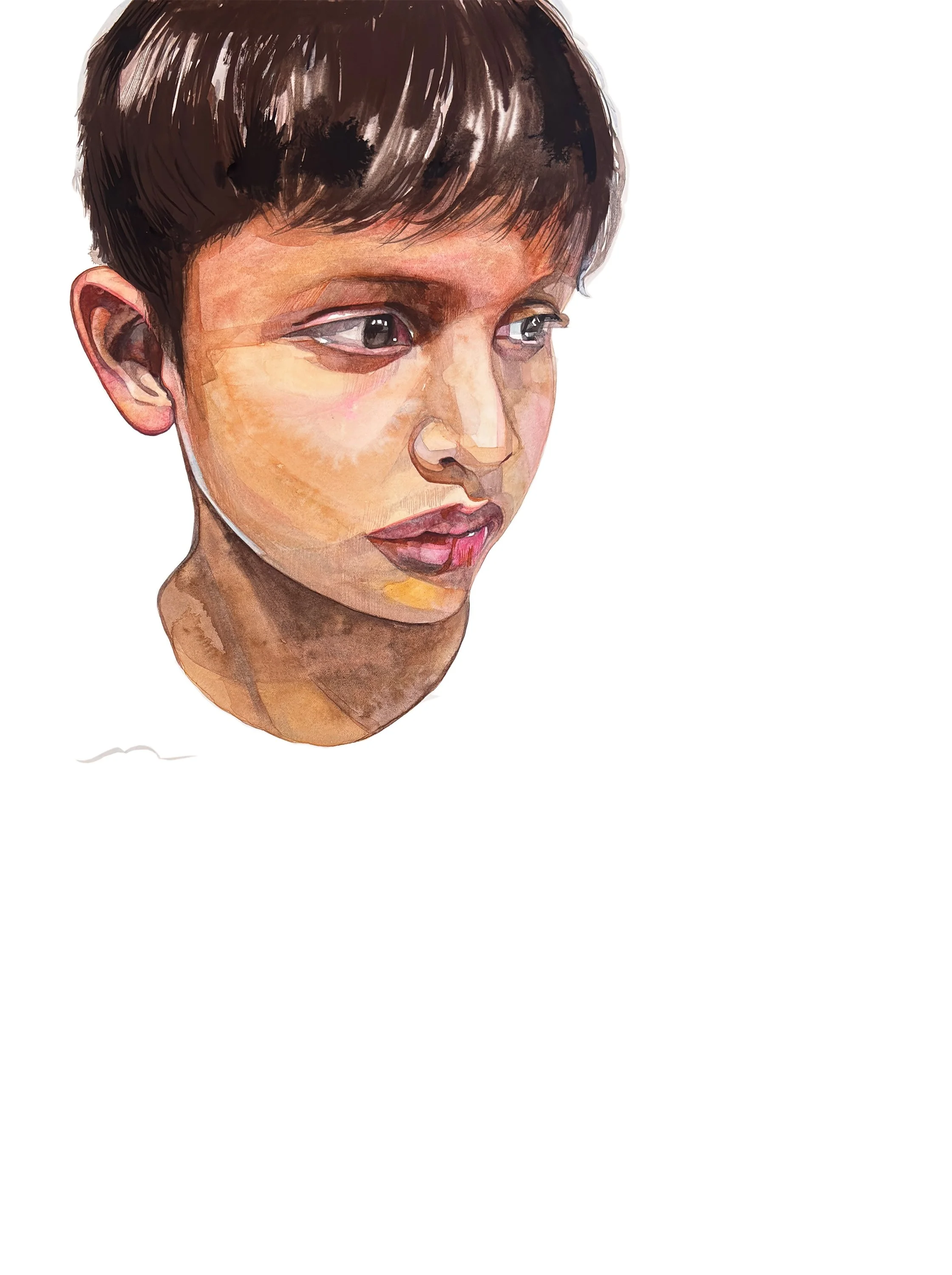
Aiden
2026
Watercolor on paper
Private commission
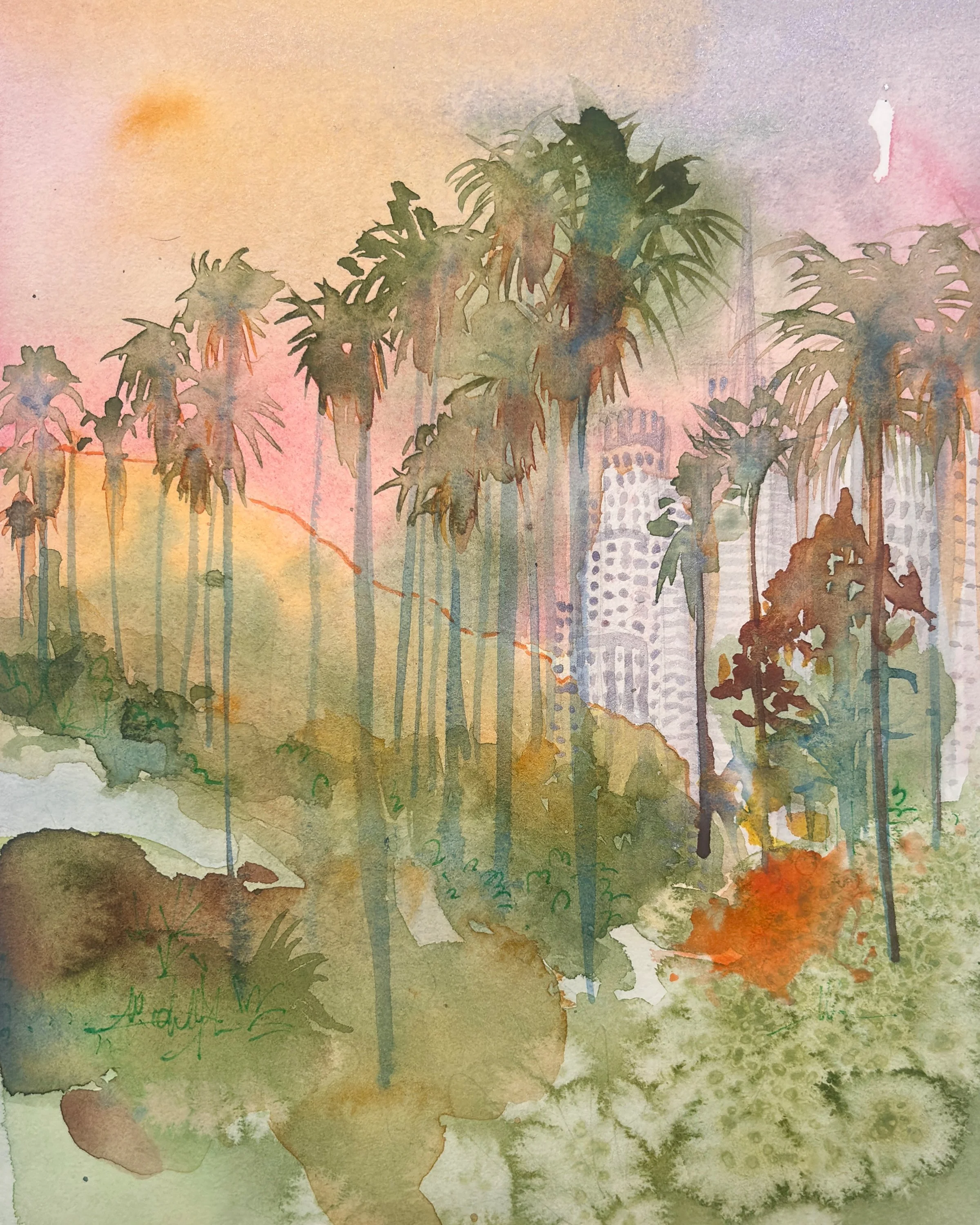
Watercolor painting by Michelle Sindha Thomas

Watercolor on paper
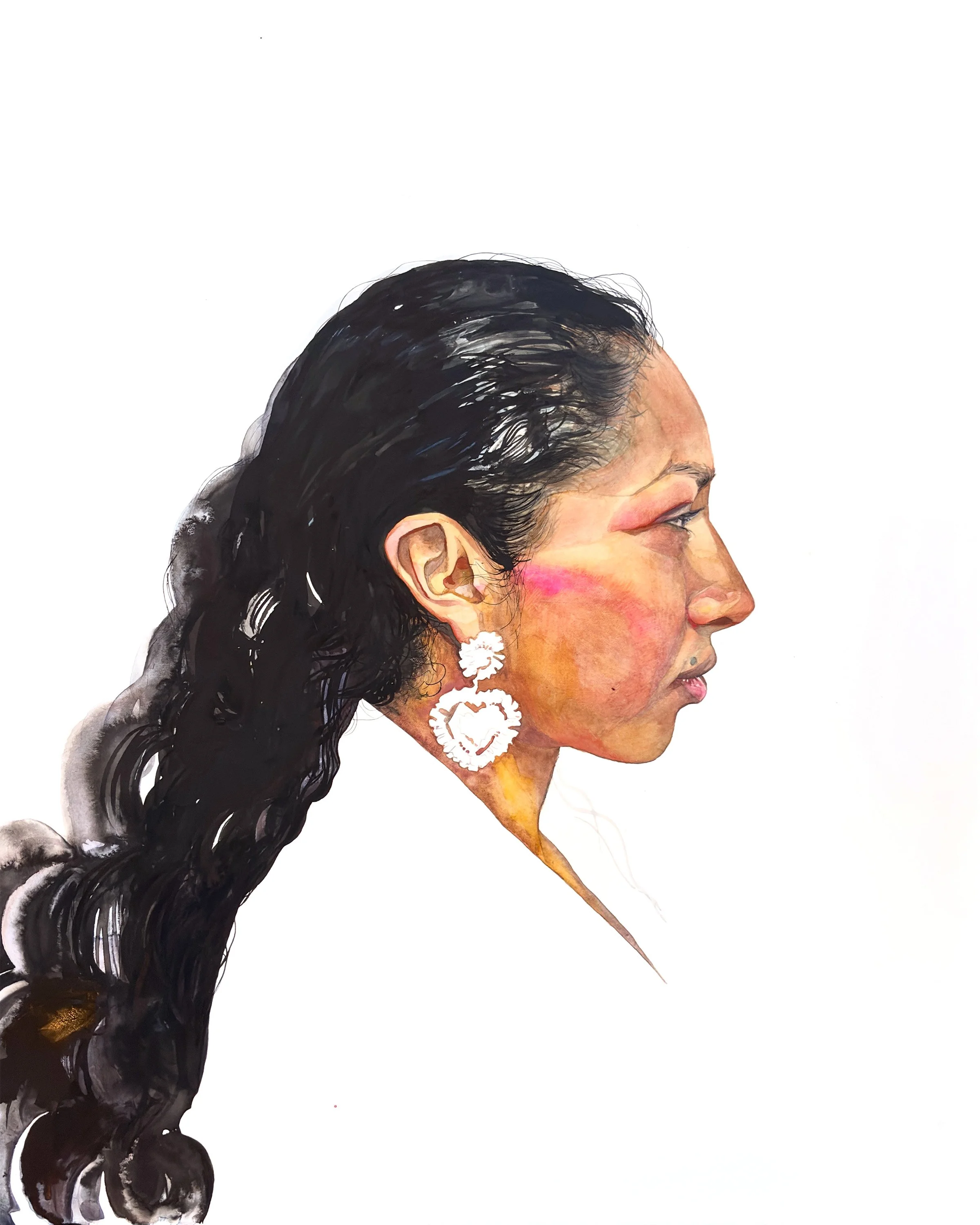
Mercy by Michelle Sindha Thomas
22”x30”
Watercolor on paper
$2500
SHOP
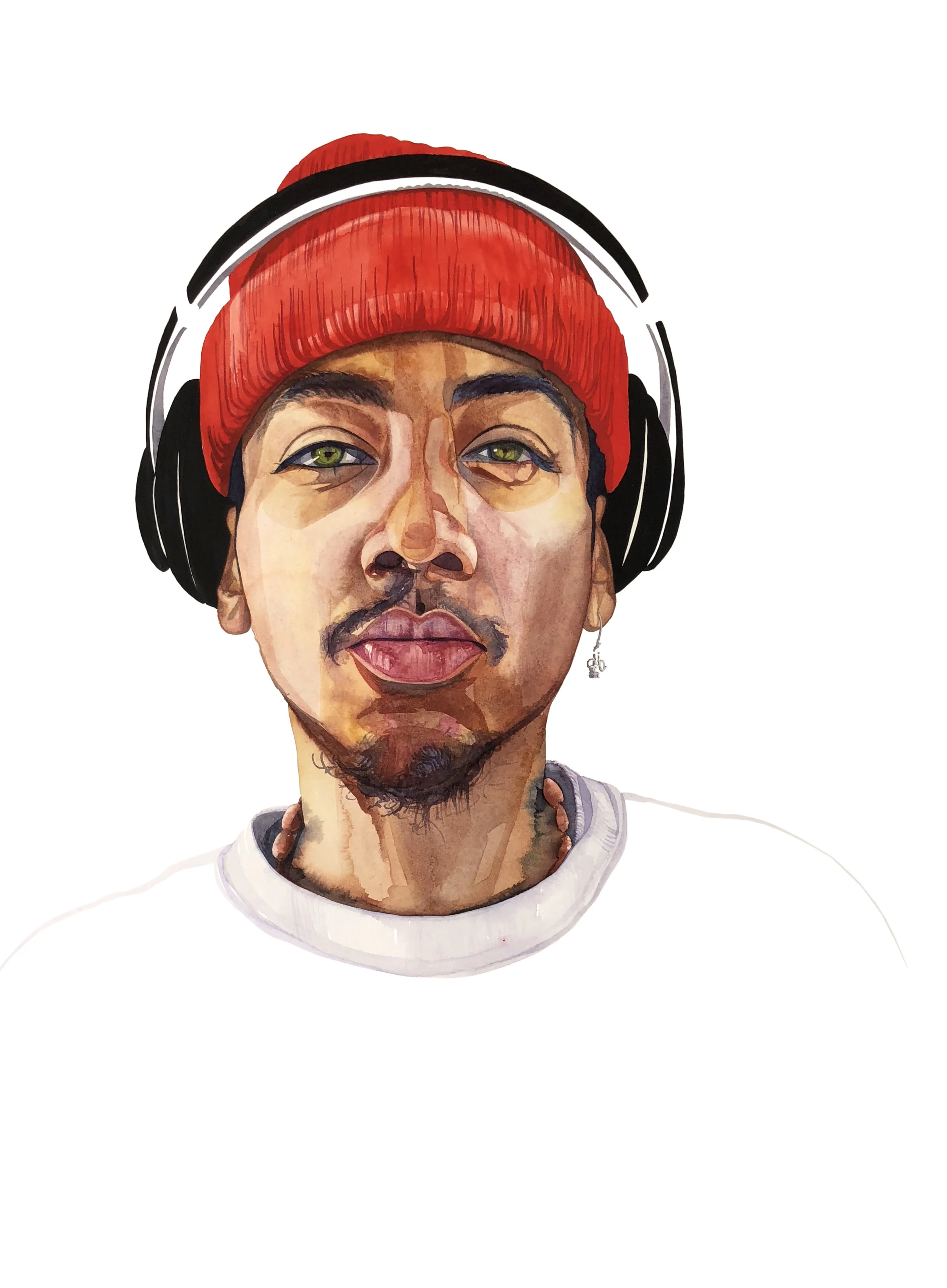
Watercolor on paper
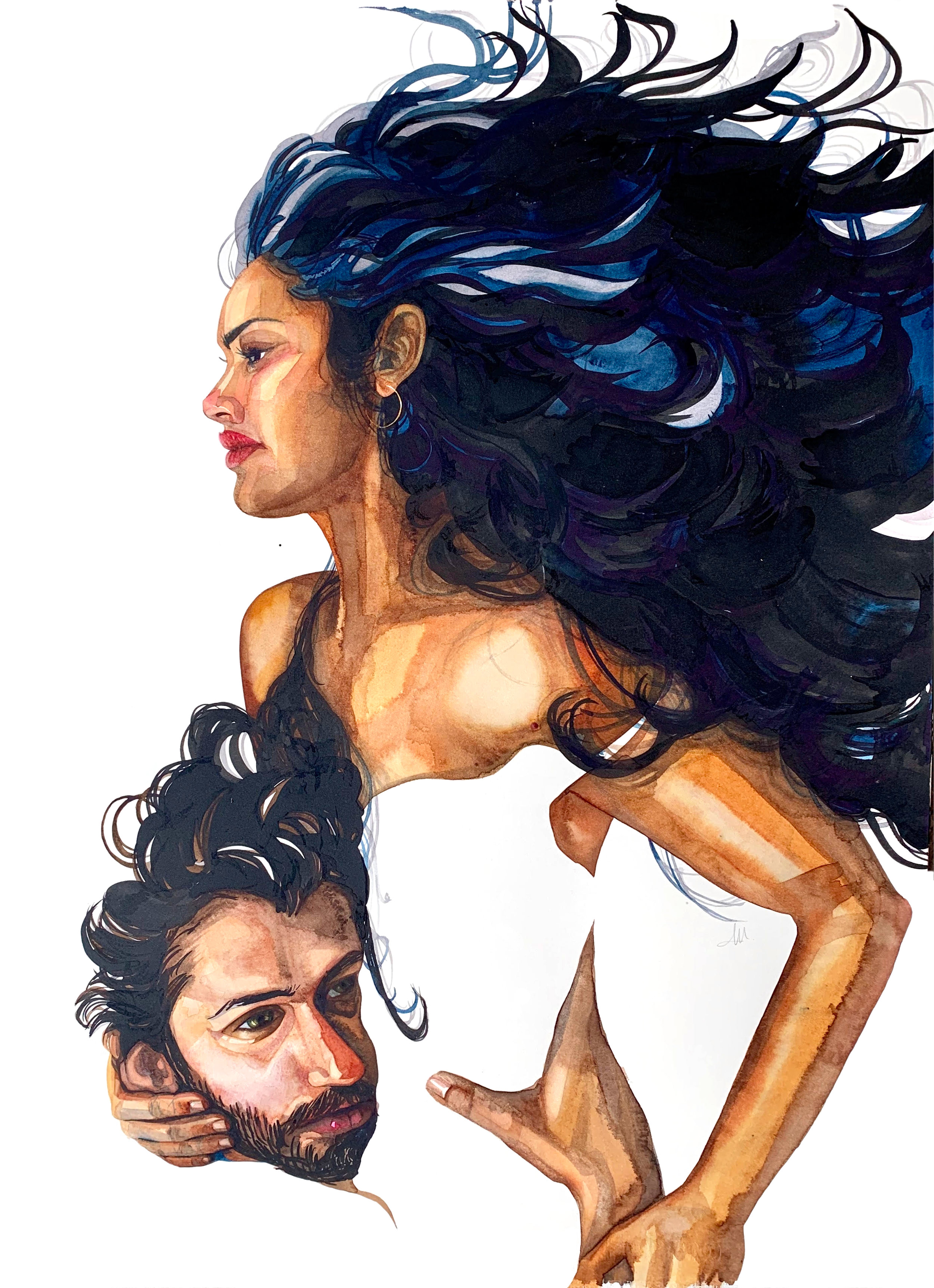
Watercolor on paper
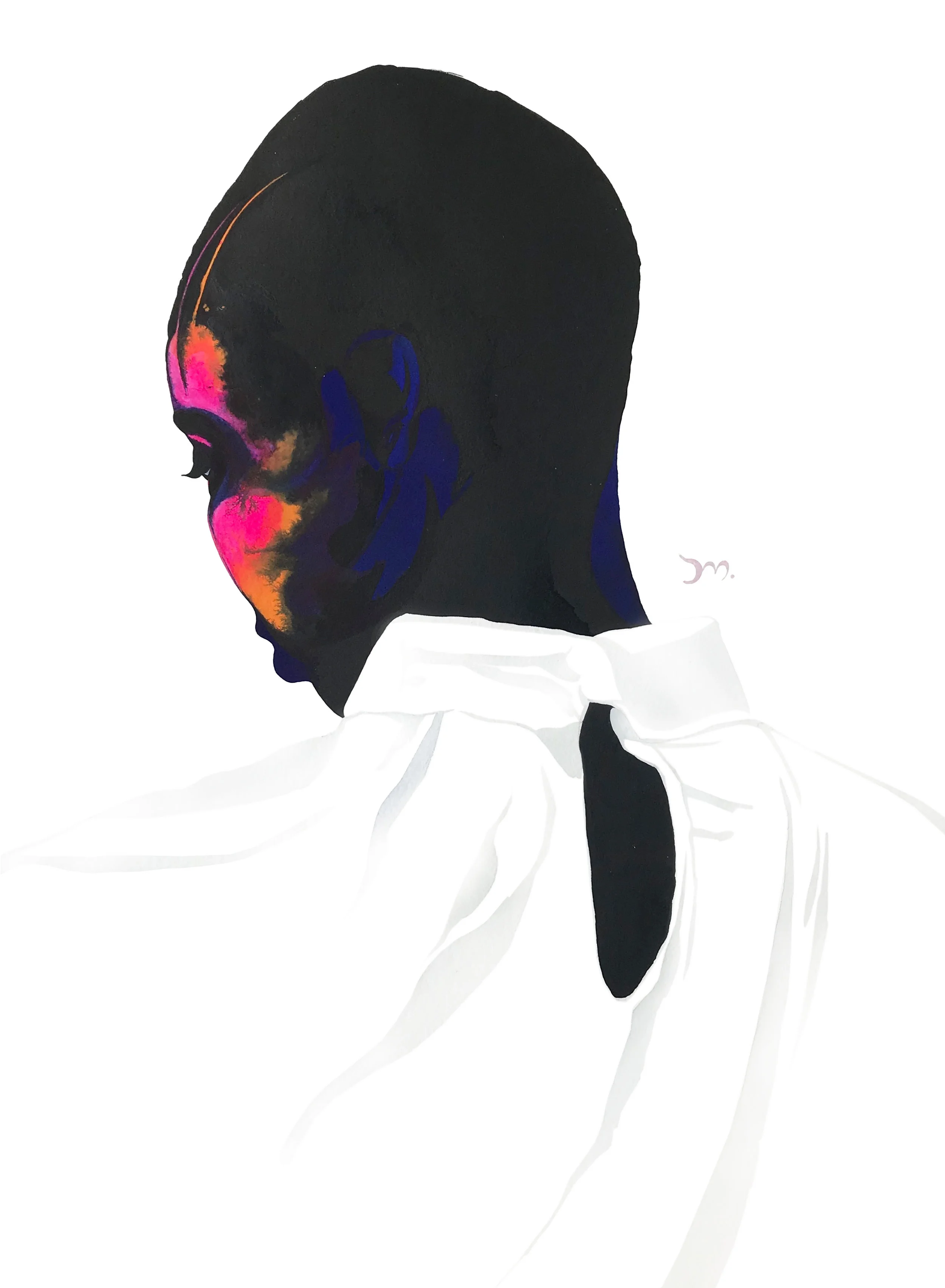
Watercolor on paper

Watercolor collage on paper
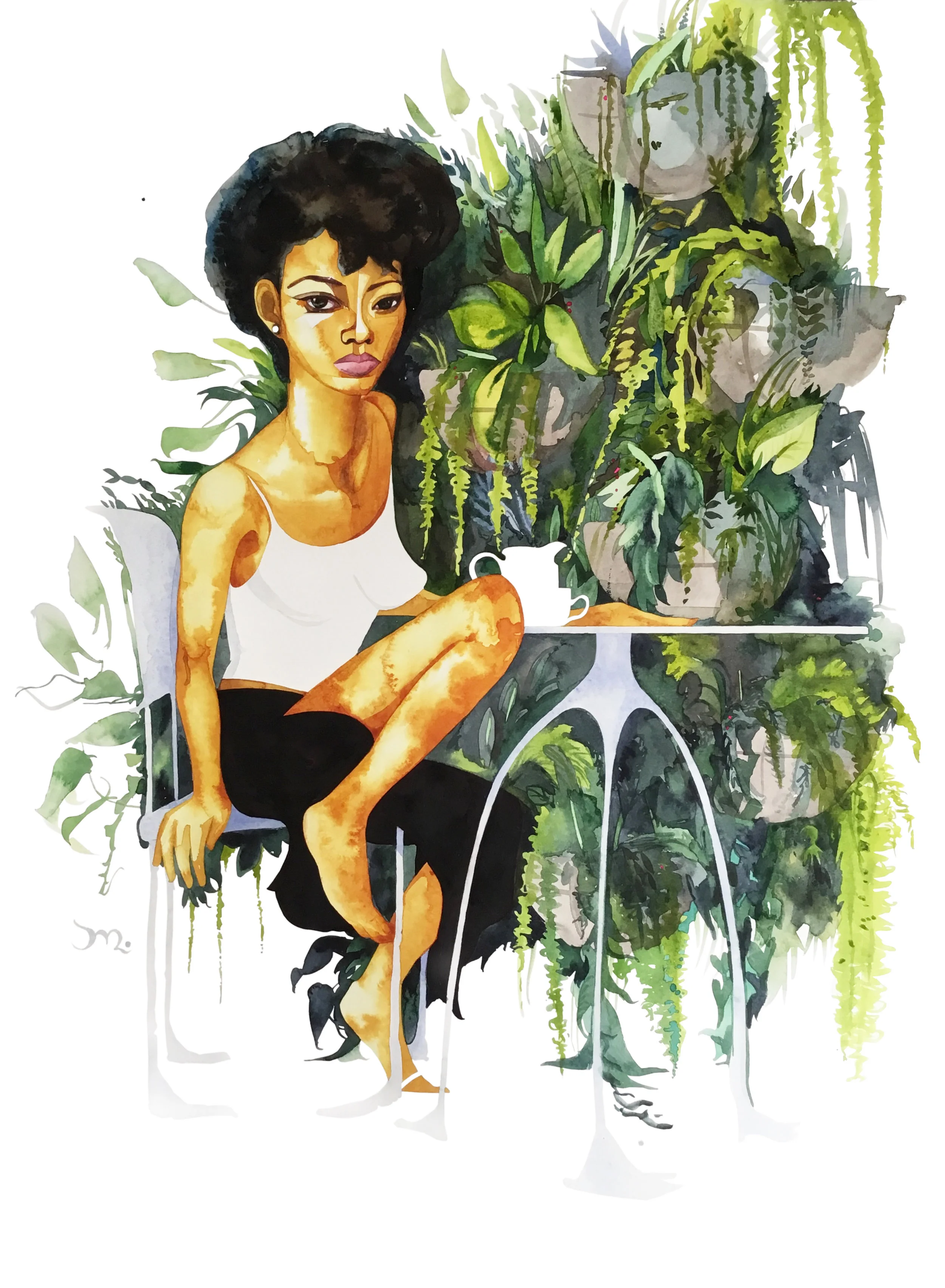
Watercolor on paper
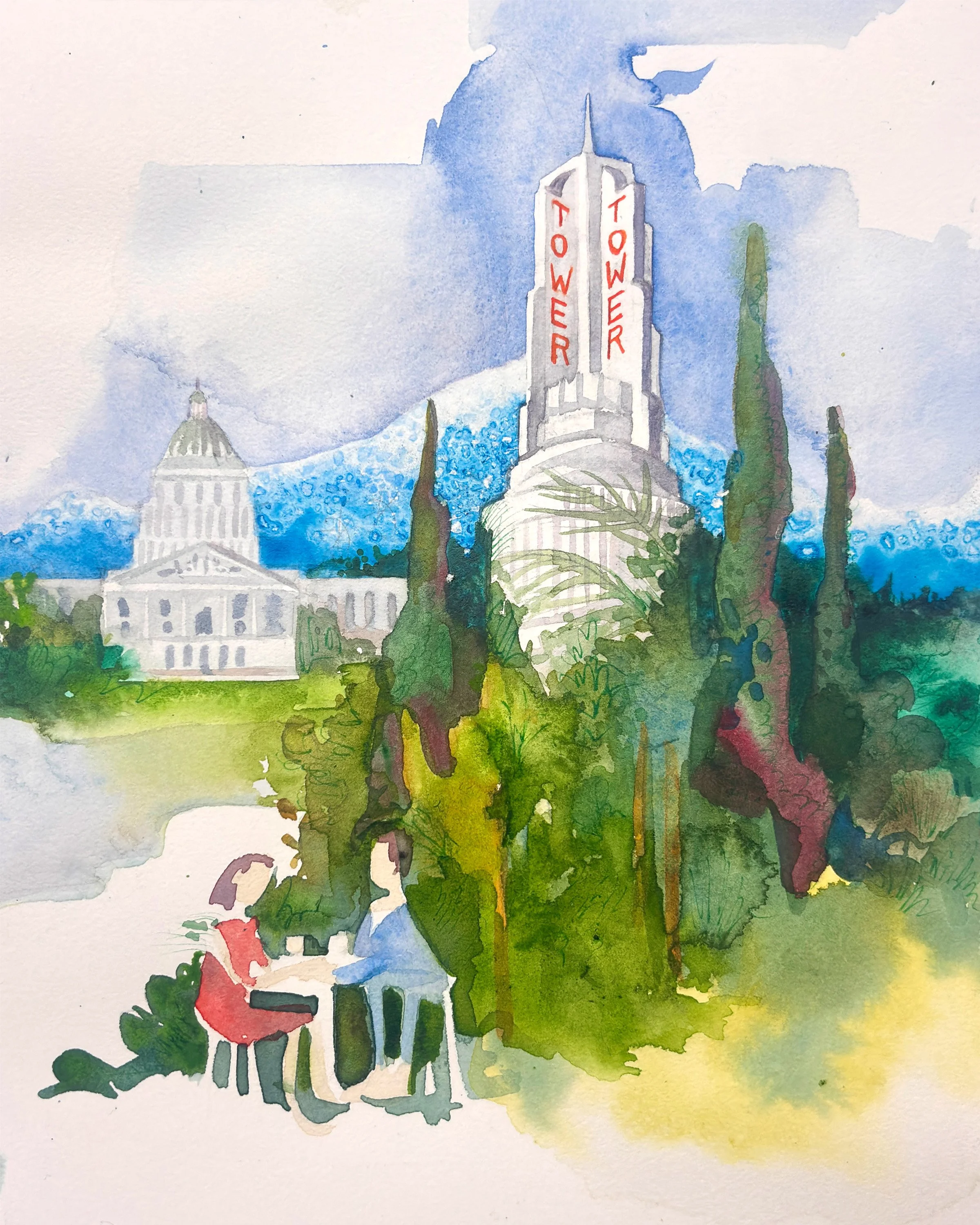
Watercolor painting by Michelle Sindha Thomas
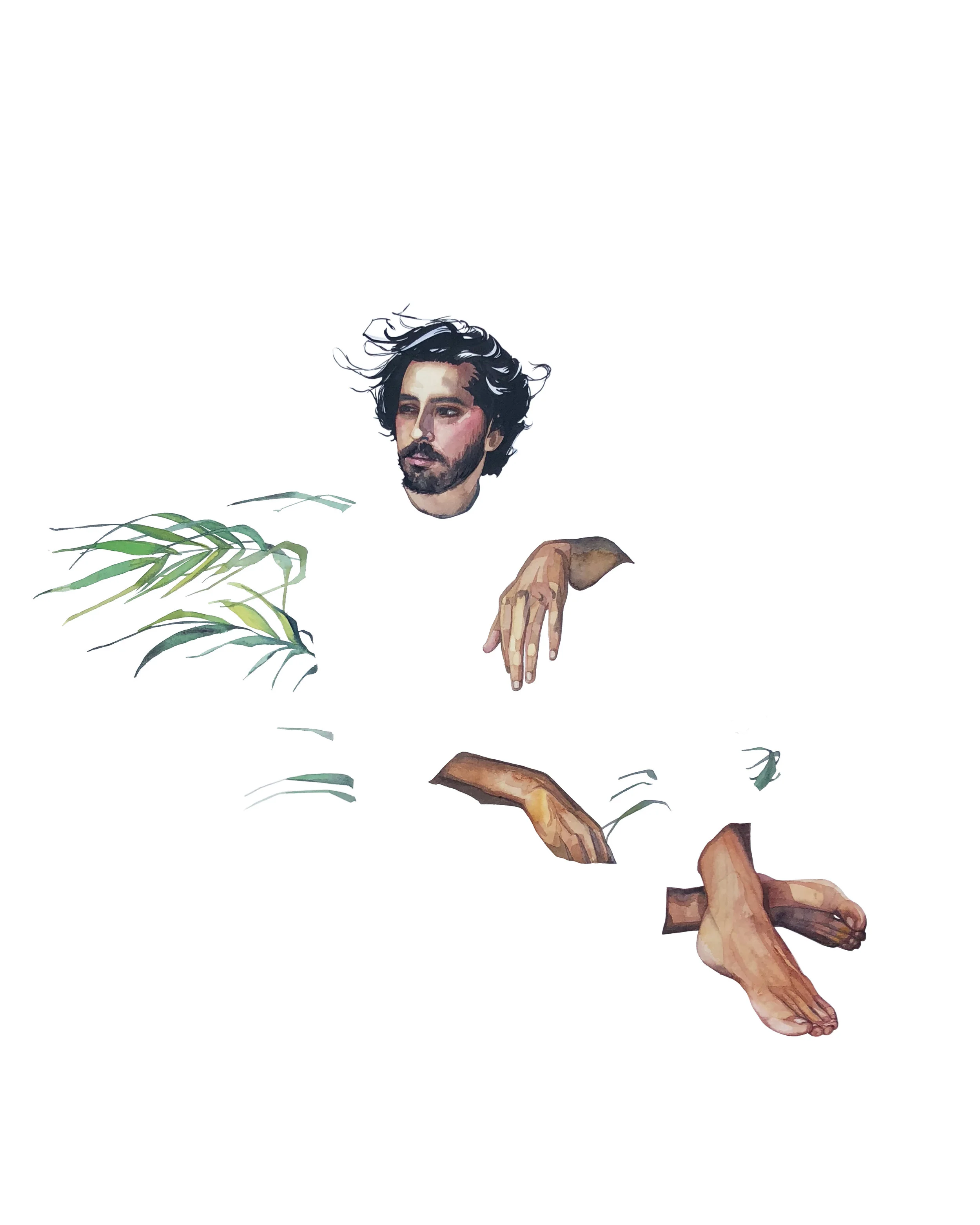
Watercolor on paper
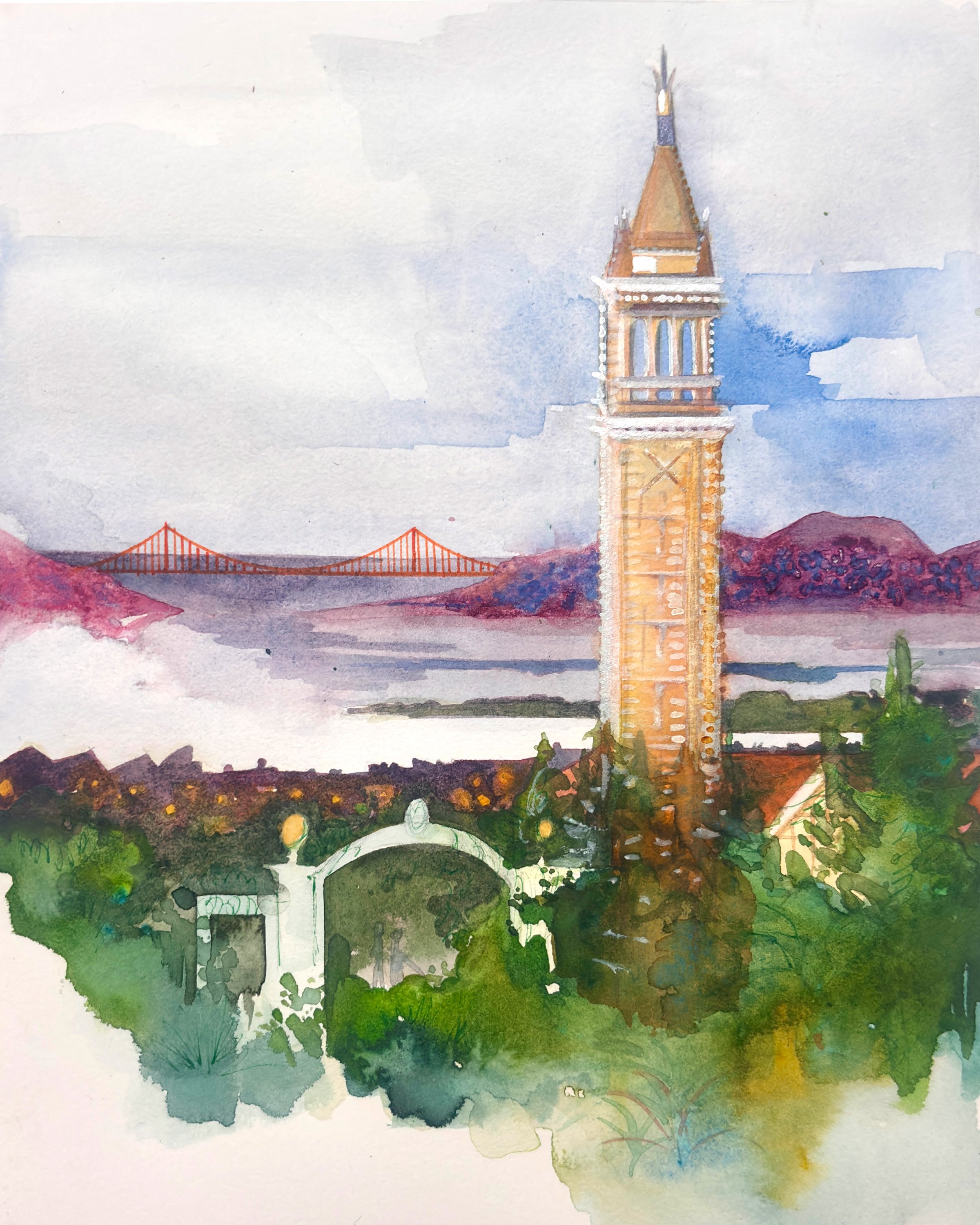
Watercolor painting by Michelle Sindha Thomas

Watercolor on paper
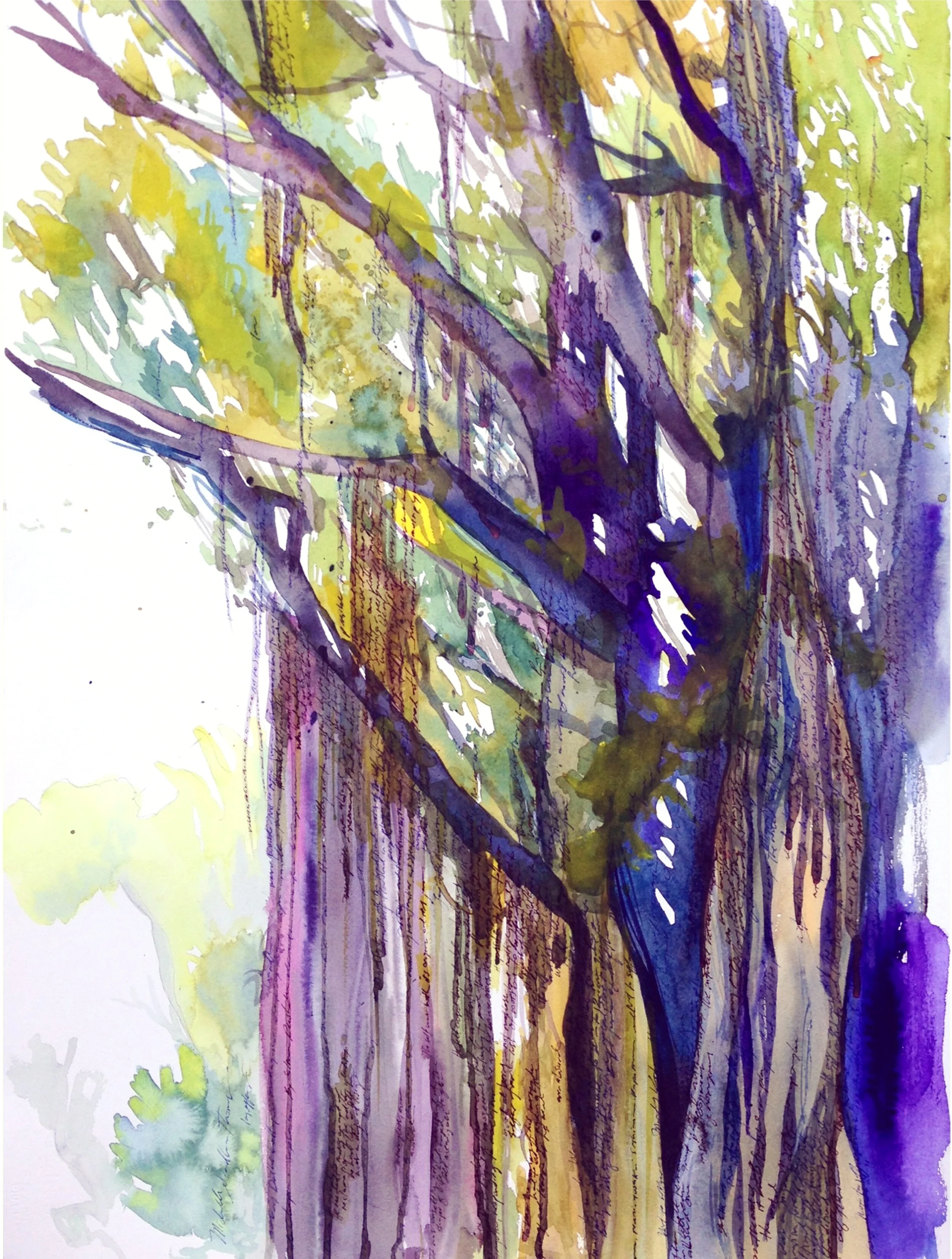
Watercolor and ink on paper
"Banyan" layers a passage on roots from Salman Rushdie’s memoir upon layers of watercolor and ink: "He was a migrant. He was one of those who had ended up in a place that was not the place where he began. Migration tore up all the traditional roots of the self. The rooted self flourished in a place it knew well, among people who knew it well, following customs and traditions with which it and its community were familiar, and speaking its own language among others who did the same. Of these four roots, place, community, culture, and language, he had lost three [. . .] The migrated self became, inevitably, heterogeneous instead of homogeneous, belonging to more than one place, multiple rather than singular, responding to more than one way of being, more than averagely mixed up. Was it possible to be—to become good at being—not rootless, but multiply rooted? Not to suffer from a loss of roots but to benefit from an excess of them?"
—Salman Rushdie in "Joseph Anton"
Michelle Sindha Thomas
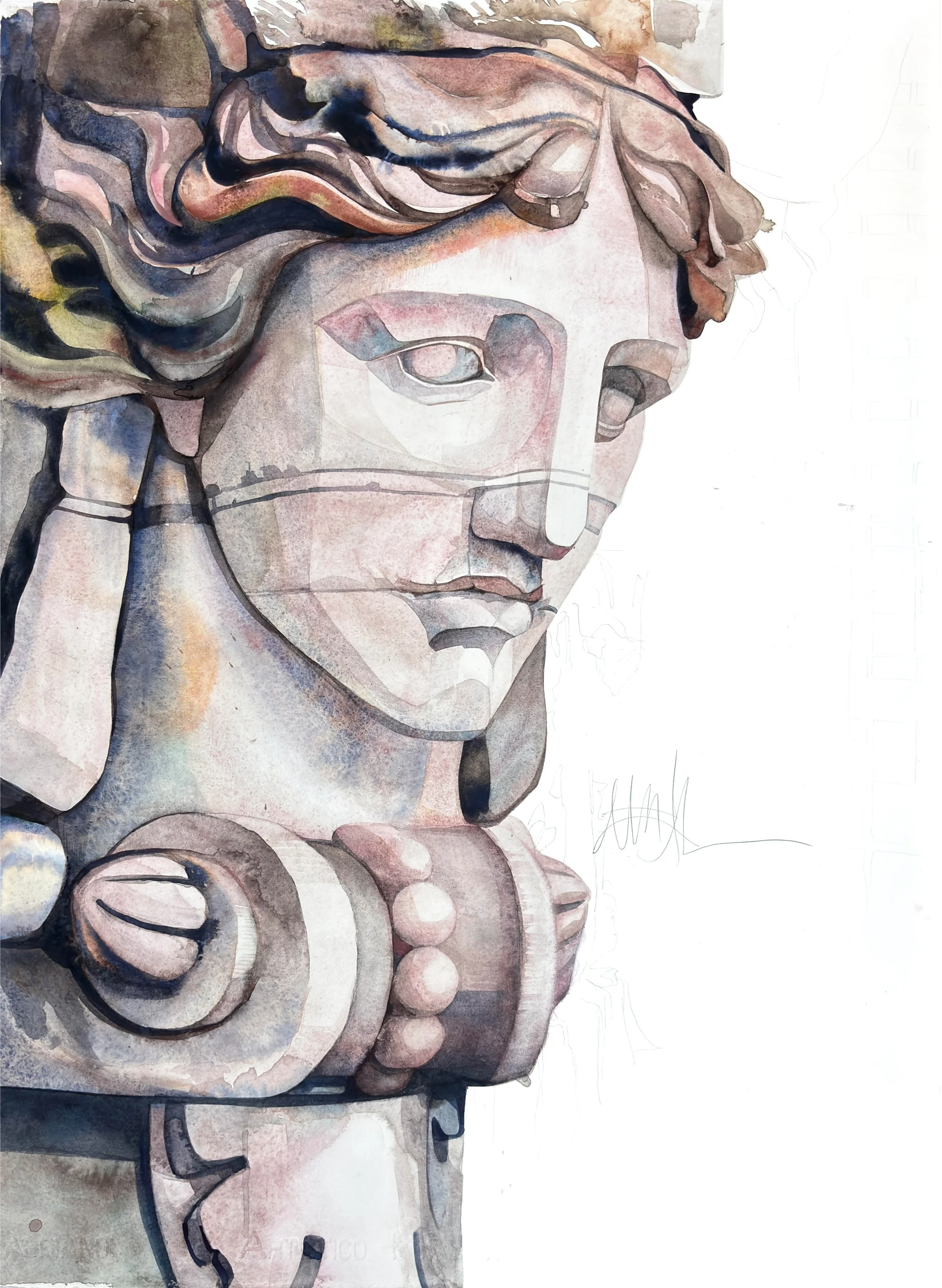
AWAKENINGS: Caryatid Contemplates Escape
2023
Watercolor on paper
SHOP
Referencing a figure from the roof of the Metropolitan Museum of Art in New York, this work acknowledges an archetypal woman on whom an institution depends, capturing the moment of awakening when she realizes how much she carries on behalf of others, contemplating what would happen if she decides to walk away.
Michelle Sindha Thomas
Shah Jahan Reclaims his Spectacles
2024
Watercolor on paper
SHOP
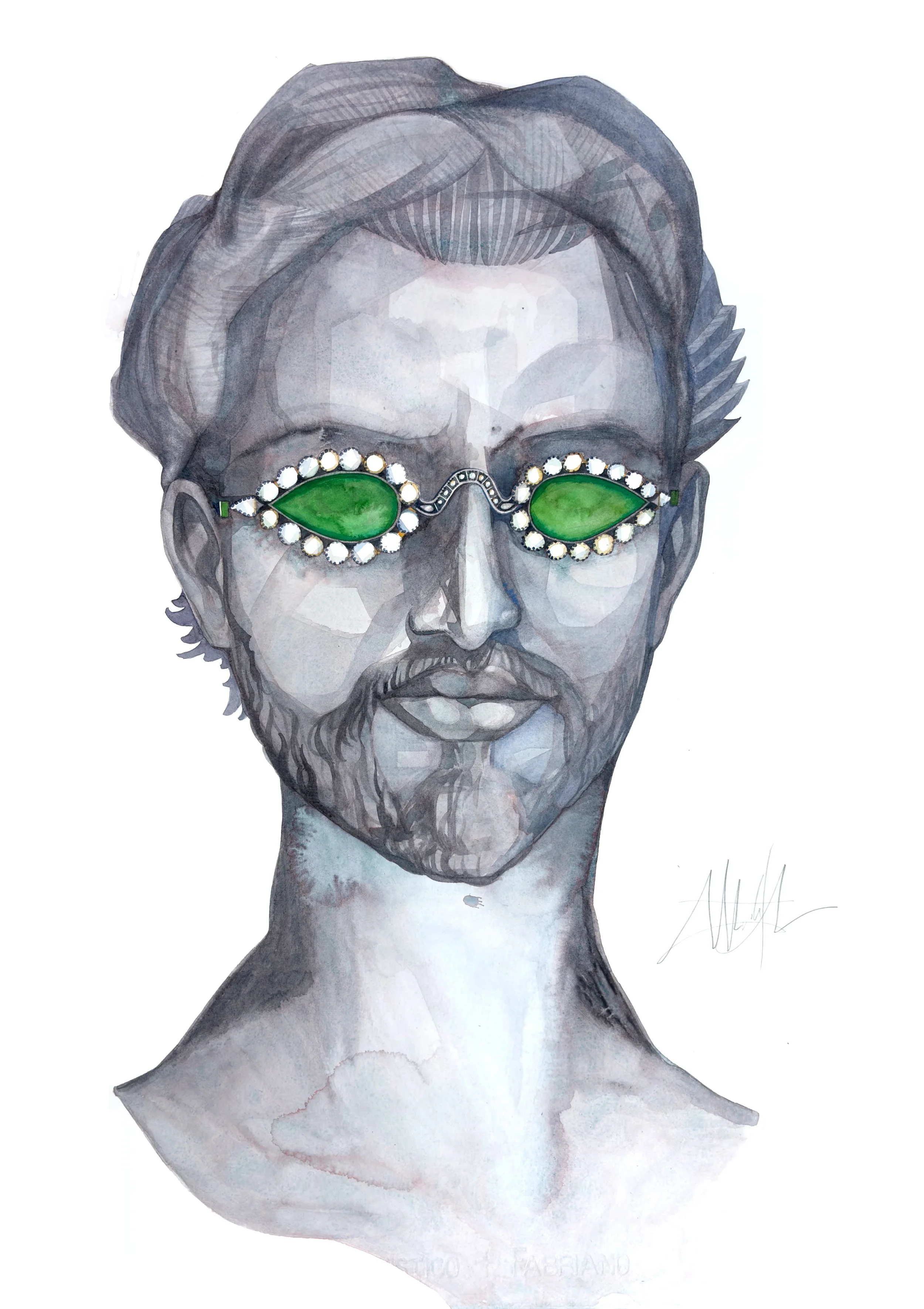
In 2021, a pair of spectacles went up for auction at Sotheby’s. The diamond-mounted frames set with emerald lenses date to the 17th century court of Shah Jahan, never before on public view. The owner who put them up for sale remains anonymous.
These were likely looted from India, like the jewels plucked from the walls of the Taj Mahal which surfaced as hat pins in Victorian England: The Koh-i-Noor diamond, one of the largest in history, was acquired by Babur, founder of the Mughal empire, and contributed to Shah Jahan’s Peacock Throne. It now forms part of the British Crown Jewels.
The tales of Marco Polo first set off travelers seeking to exploit the wealth of India. Describing one king, he wrote, “Suffice it that he wears in all so many gems and pearls that their price exceeds that of a fine city. Indeed no one could compute the total cost of all the jewellery he wears. And it is no wonder he wears so many, considering that all these pearls and gems are found in his own kingdom.” In the 17th century, the Indian subcontinent was the sole source of diamonds in the world. The raw materials of splendor—precious fabrics, metals, and stones—still come directly from India.
The spectacles’ flat-cut lenses were originally conceived from emeralds that would have weighed over 300 carats. Dr. Usha Balakrishnan conducted an in-depth art historical study of these spectacles, noting a tradition established over two millennia in India that led to novel creations. As emeralds were held to have healing powers, Ebba Koch of the Institute of Art History in Vienna speculates, “For Shah Jahan in his extreme mental state of mourning for a lost beloved, looking through emerald glasses could have been…meant to strengthen and heal his vision…Eternal paradisiacal life was what Shah Jahan envisaged for himself and Mumtaz Mahal, and looking through the green emerald spectacles may have provided him with a foretaste of it.”
Sotheby’s describes the spectacles as “the ultimate expression of wealth, luxury, and aesthetic sophistication.” Pharell Williams commissioned a replica from Tiffany & Co. and continues to appropriate them without credit as his signature accessory.
Meanwhile, I was thrilled to observe the latest Ambani wedding festivities. Magnificent, elephantine Anant in his gold watches and fluttering silks is a poster boy for excess as he weds Radhika, daughter of a diamond merchant. Criticized as they were for the expensive celebrations, dripping in gems, the Ambanis reclaim for all of us a South Asian identity which includes “wealth, luxury, and aesthetic sophistication,” images of Indian opulence flooding mainstream Western media and providing an alternative to the persistent slumdog mantle of lack we are expected to bear, represent, and explain. We reclaim our heritage of lush fertility and abundance, refuse the insistence of those who disbelieve us, and carry on in exuberant splendor.
Michelle Sindha Thomas
Languishing in Lansing
2024
Watercolor on paper
SHOP
I crave connection. As a child, little orphan Annie and Julia Roberts were the first icons with whom I identified, for their curly hair, toothsome smiles, and spunk. During my moody adolescence, I felt akin with Manisha Koirala of Dil Se, hair windswept in the desert, almond eyes full of sorrow, her affixed pout. I wished I, too, lived in faraway India where a Shah Rukh Khan might recognize my spark and rescue me from irrelevance. I long to find common ground in others, to identify my place in their context. As I was raised in the American Midwest and still live among those who differ from me in appearance, lifestyle, religion, worldview, I am now the queen of forced connections.
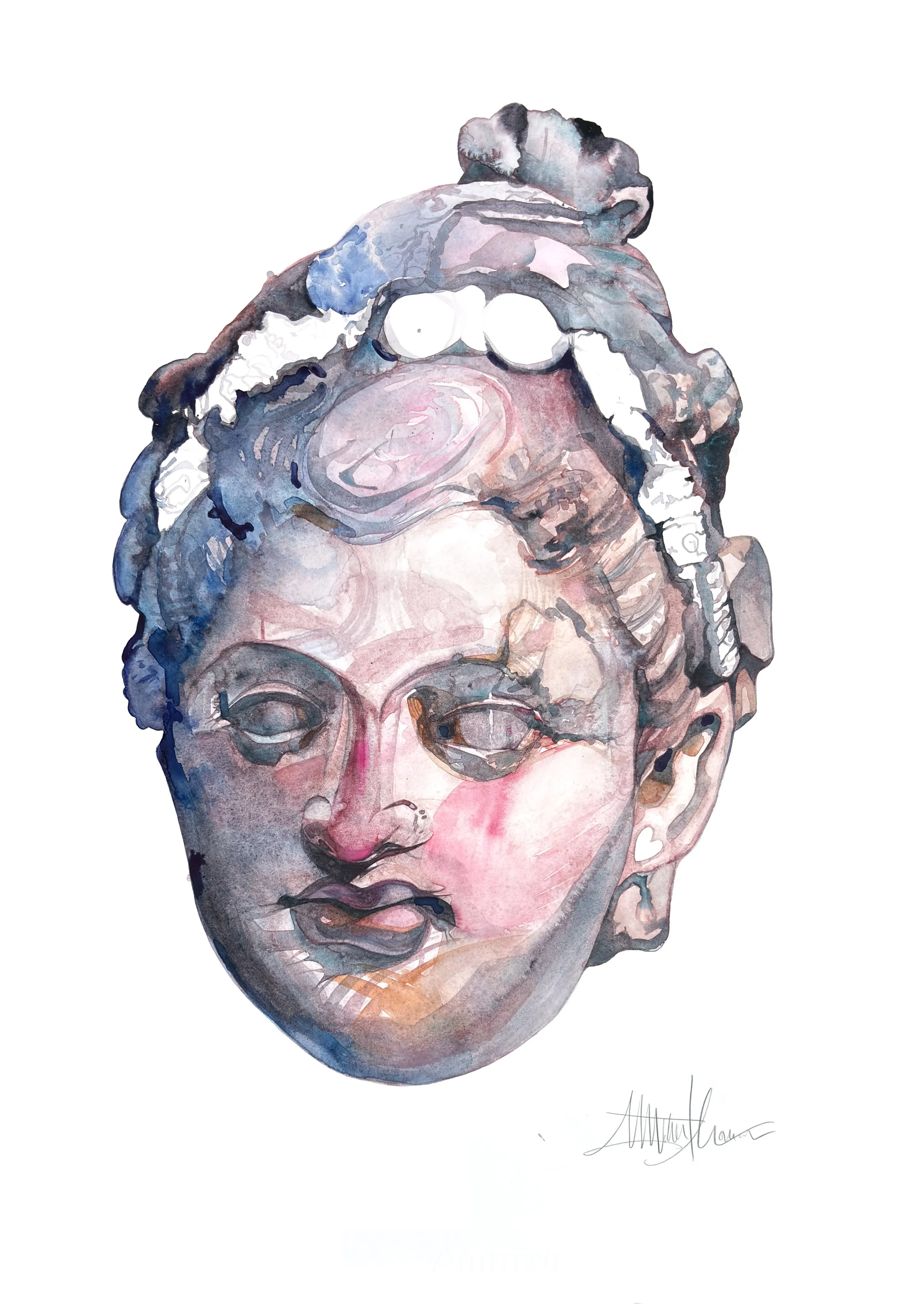
I opened my first Indian art history book as an adult and encountered “Head of a Damsel” a 6th century terracotta sculpture in the collection of CSVS Museum in Mumbai. As she is described in the museum catalog:
This terracotta head is probably that of a dancer. Notice the exotic jewellery! Her elaborate hairdo is adorned with beautiful hair ornaments with Makarika (crocodile) decoration. These Makarikas hold a circular floral ornament, resting on her forehead in between the bands of her curly hair. Behind this is another ornamental band over an attractive coiffure. The face is a combination of the Gandhara and Gupta styles. Observe the large bow-like eyebrows, the elegant nose, and the full, sensuous lips. The head is stylishly bent in a slight profile highlighting the beauty of her face.
I felt a rush of recognition and connection with my art historical doppelgänger. She made perfect sense in ancient Akhnoor where she was created, she made perfect sense on display in tropical Mumbai—she would have languished in Lansing, as I did, shopping at the mall to fit in as well as possible with other girls by means of scrunchies and butterfly hair clips, refusing Indian jewelry in a gold too bright for the suburbs and begging my parents for fun earrings from Claire’s.
When I encountered “Head of a Damsel”, my own 6th century face looking back at me, I realized I too am a cherubic damsel, yet born and raised and living utterly out of cultural context. With the damsel I felt kinship, I felt reassurance that I exist and might make sense somewhere—not in Lansing, where I languished, not in suburban St. Louis, maybe not even in San Francisco, though there are enough of us here who fit in nowhere to at the very least commiserate over our shared circumstance. The damsel, my 6th century sister, offers a glimmer of hope: why try so hard to force a fit when there exists, somewhere out there, a tribe to which I belong?
Watercolor on paper
Watercolor on paper
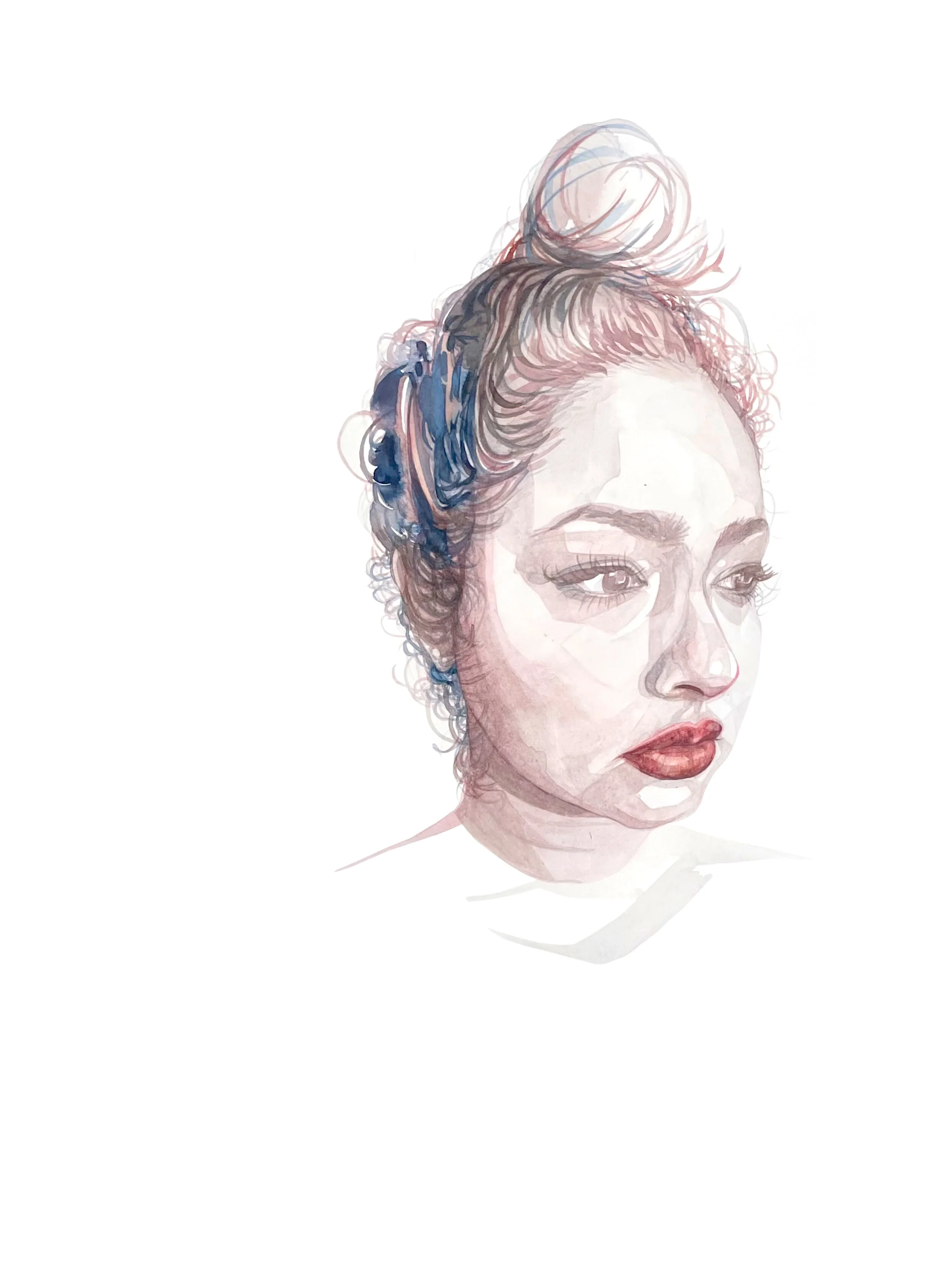
Watercolor on paper
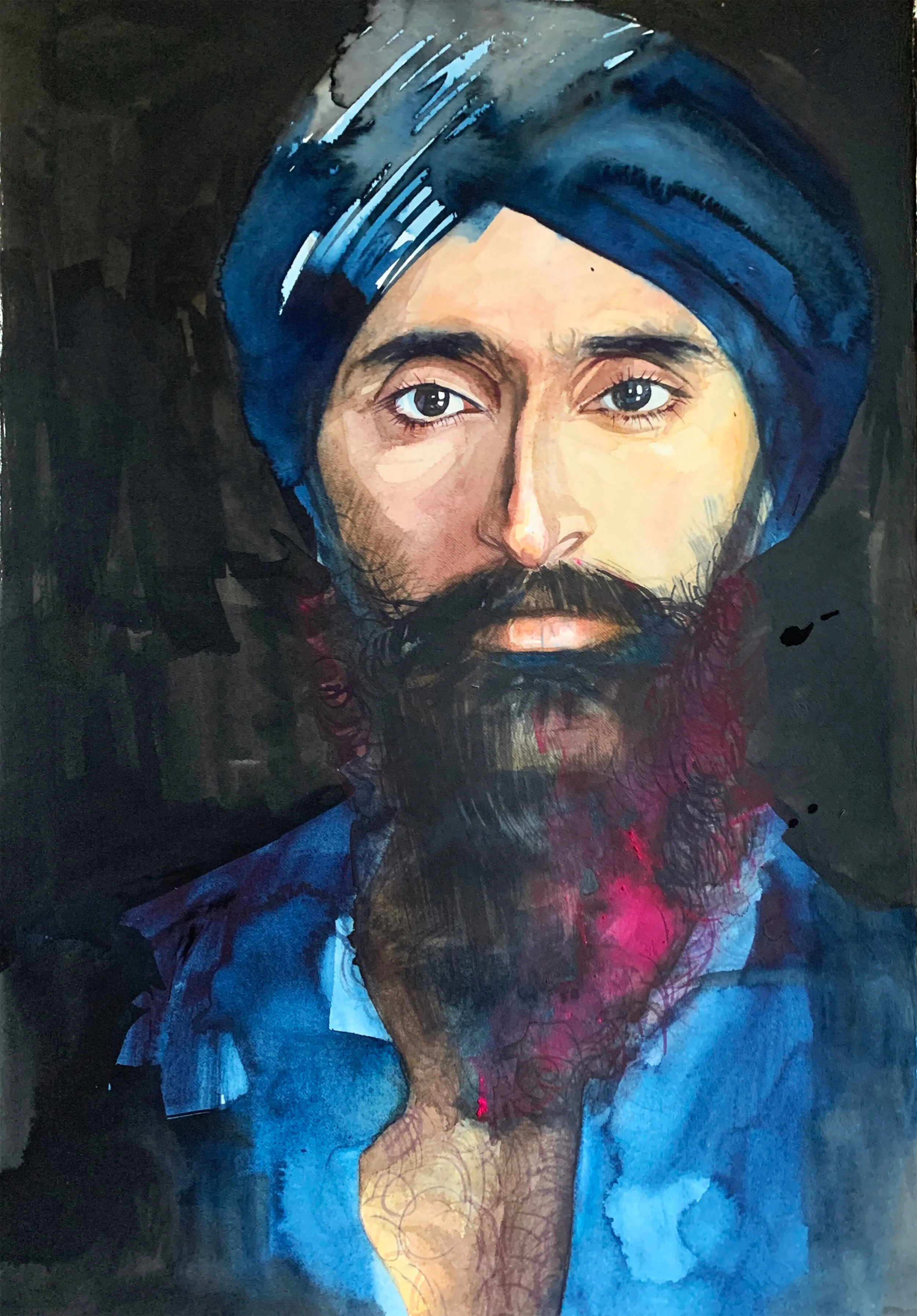
Watercolor on paper
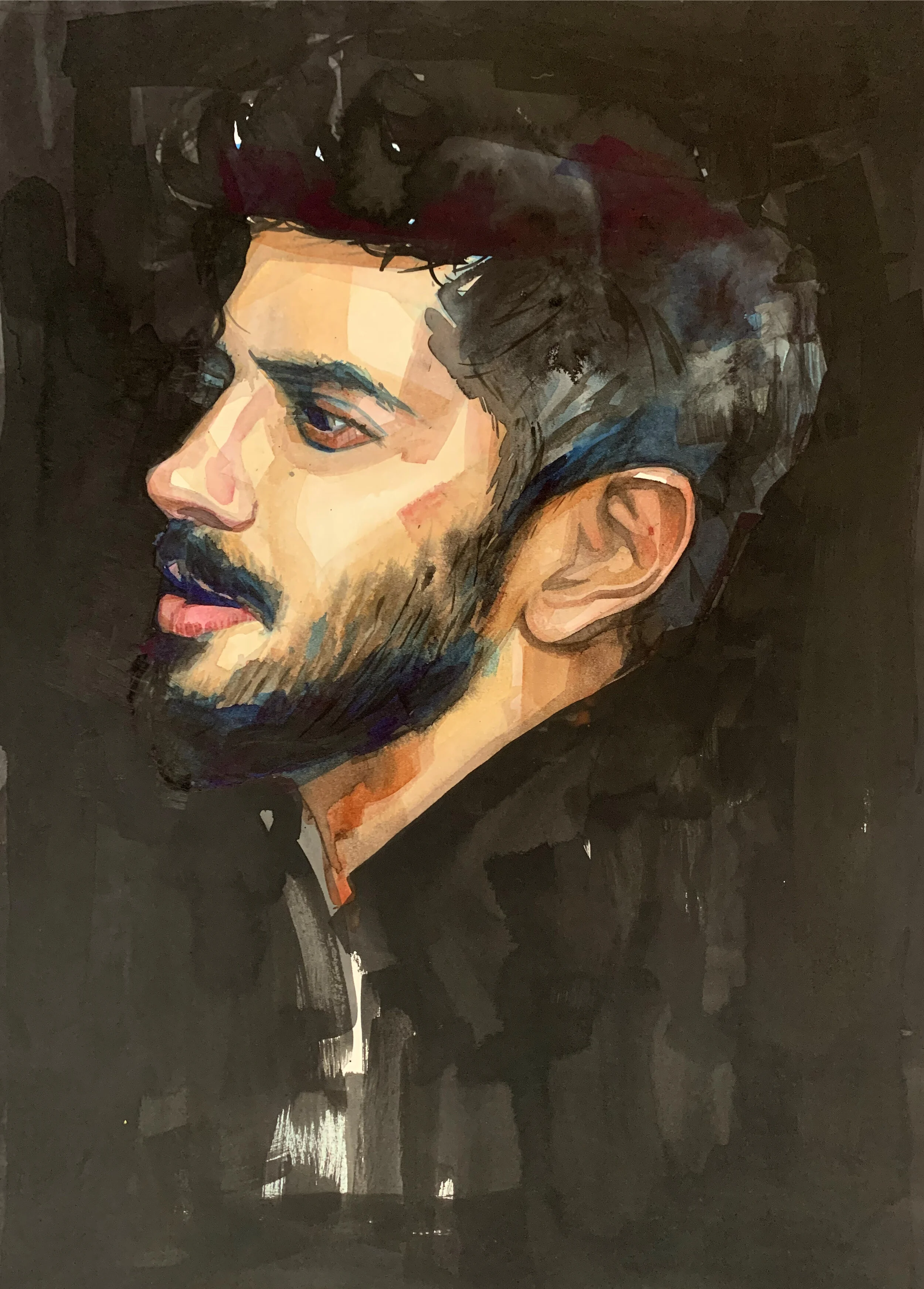
Watercolor on Paper
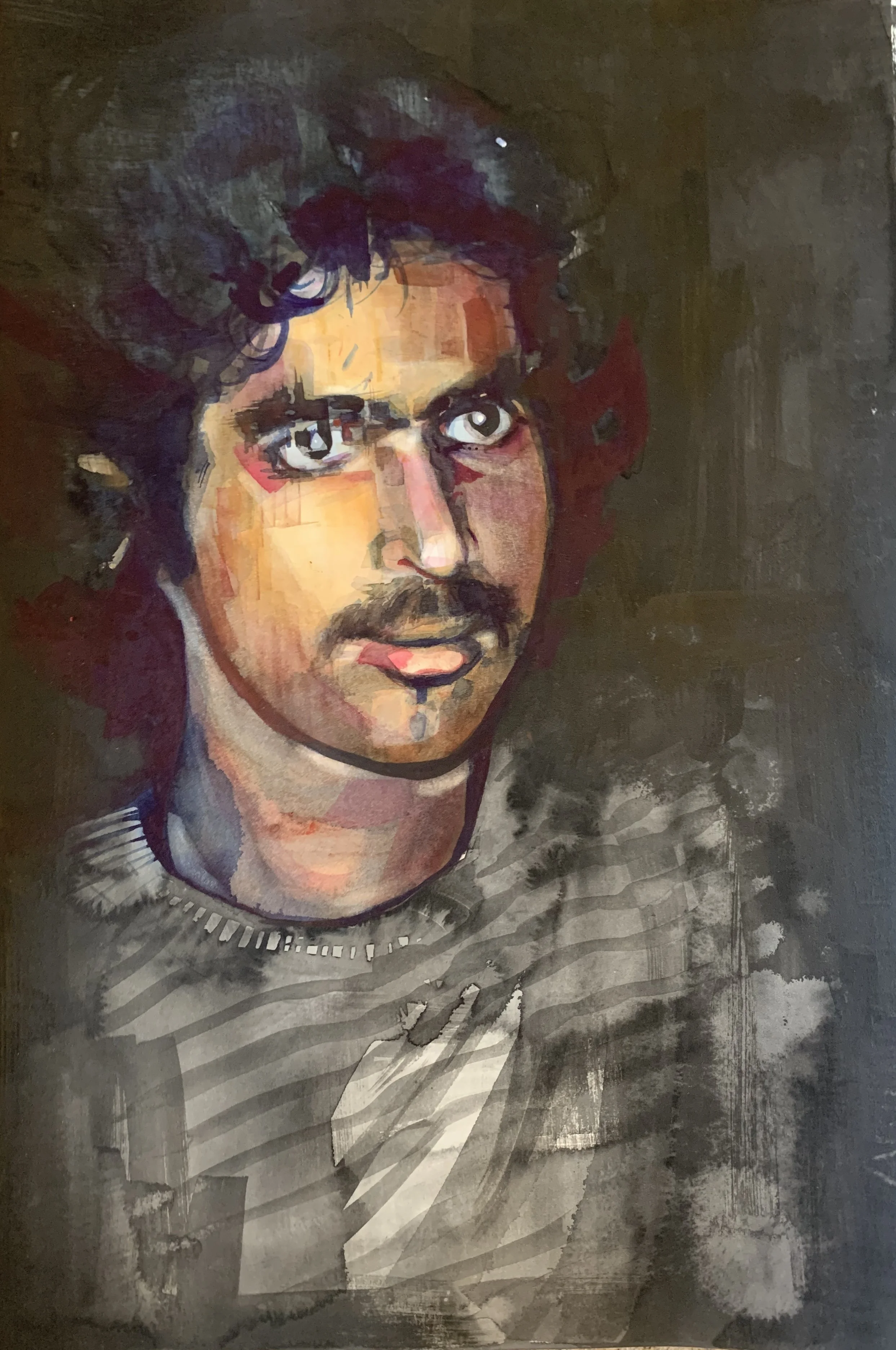
Watercolor on paper
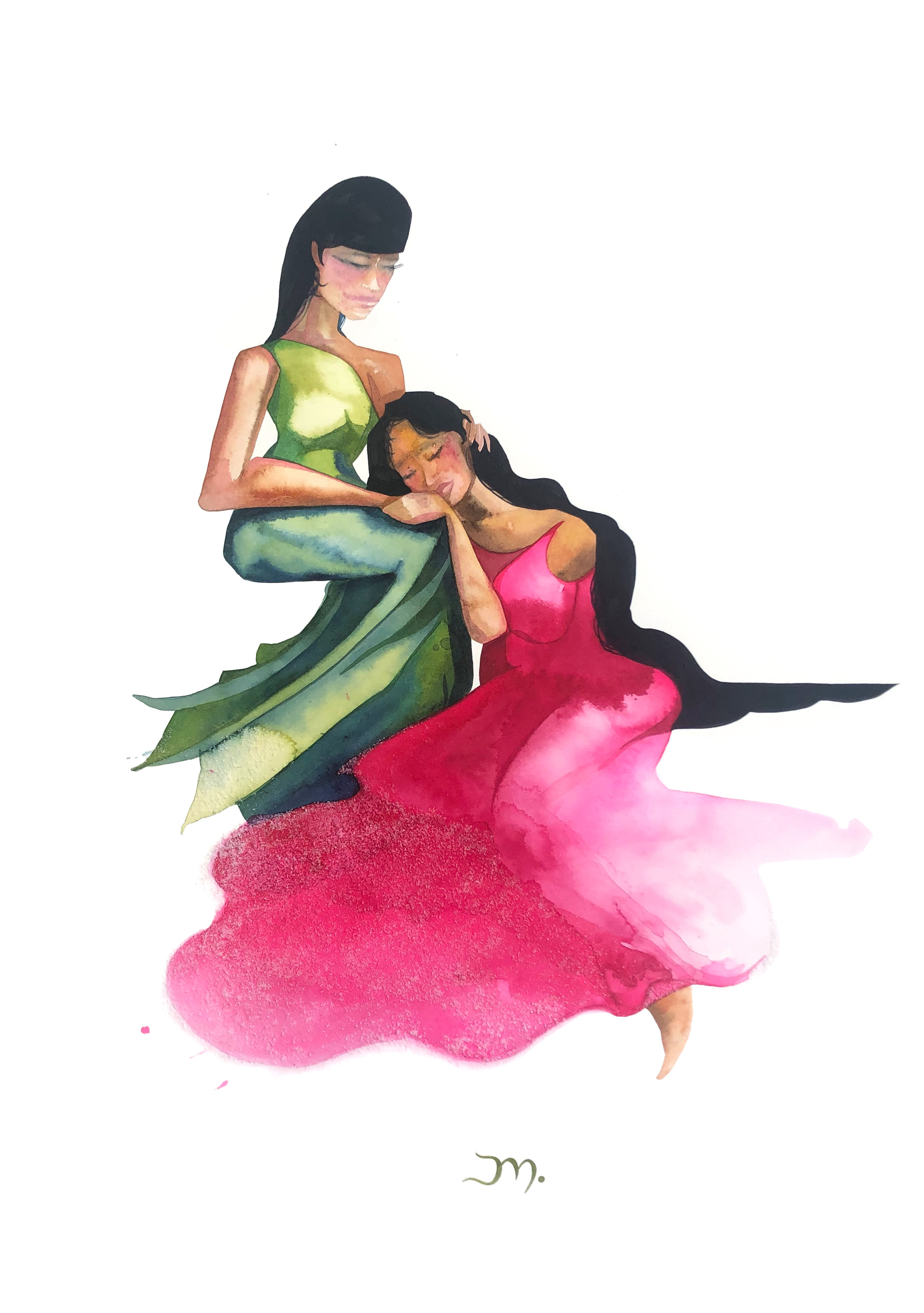
Watercolor and salt on paper

Watercolor on paper
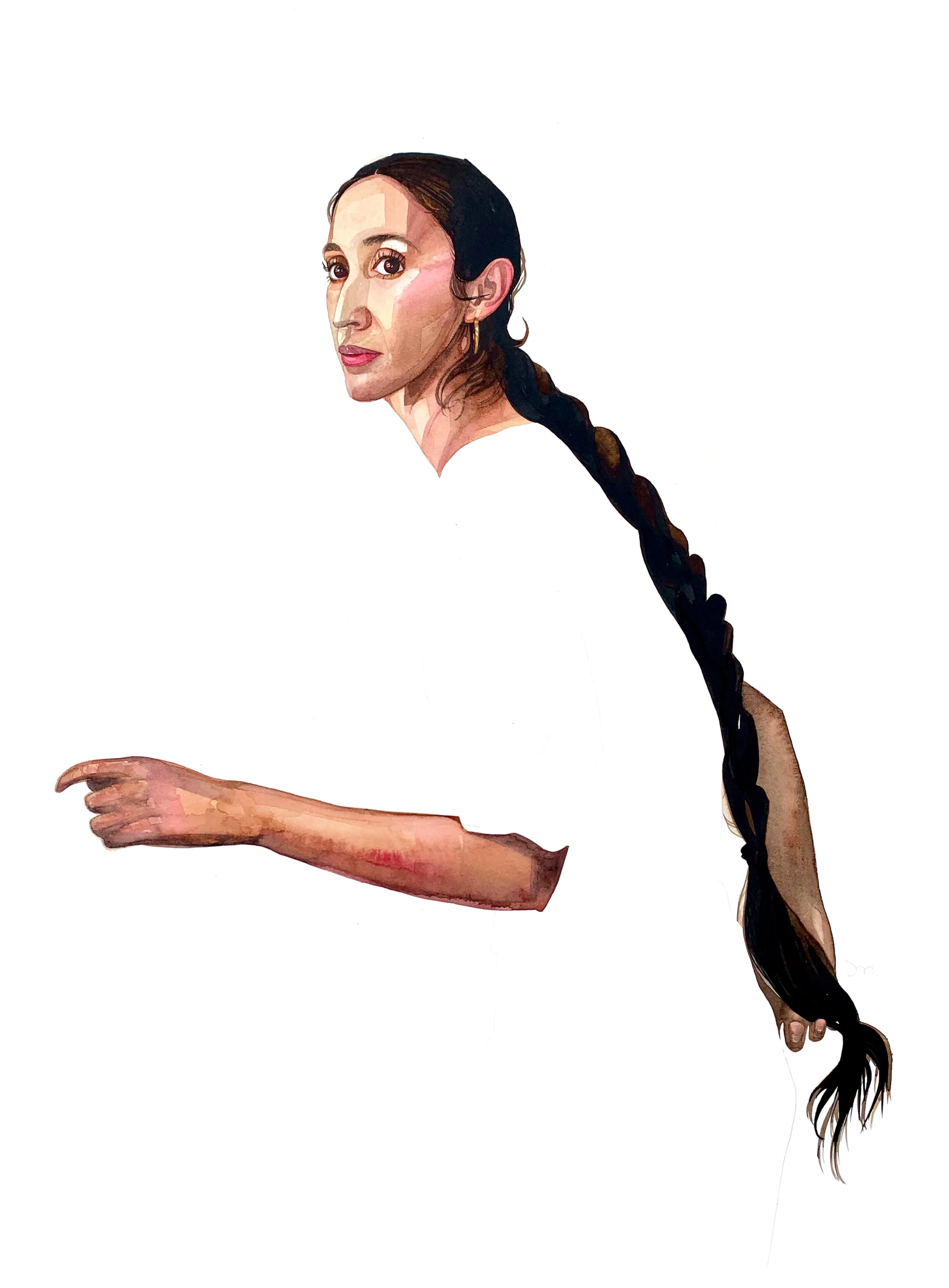
Watercolor on paper
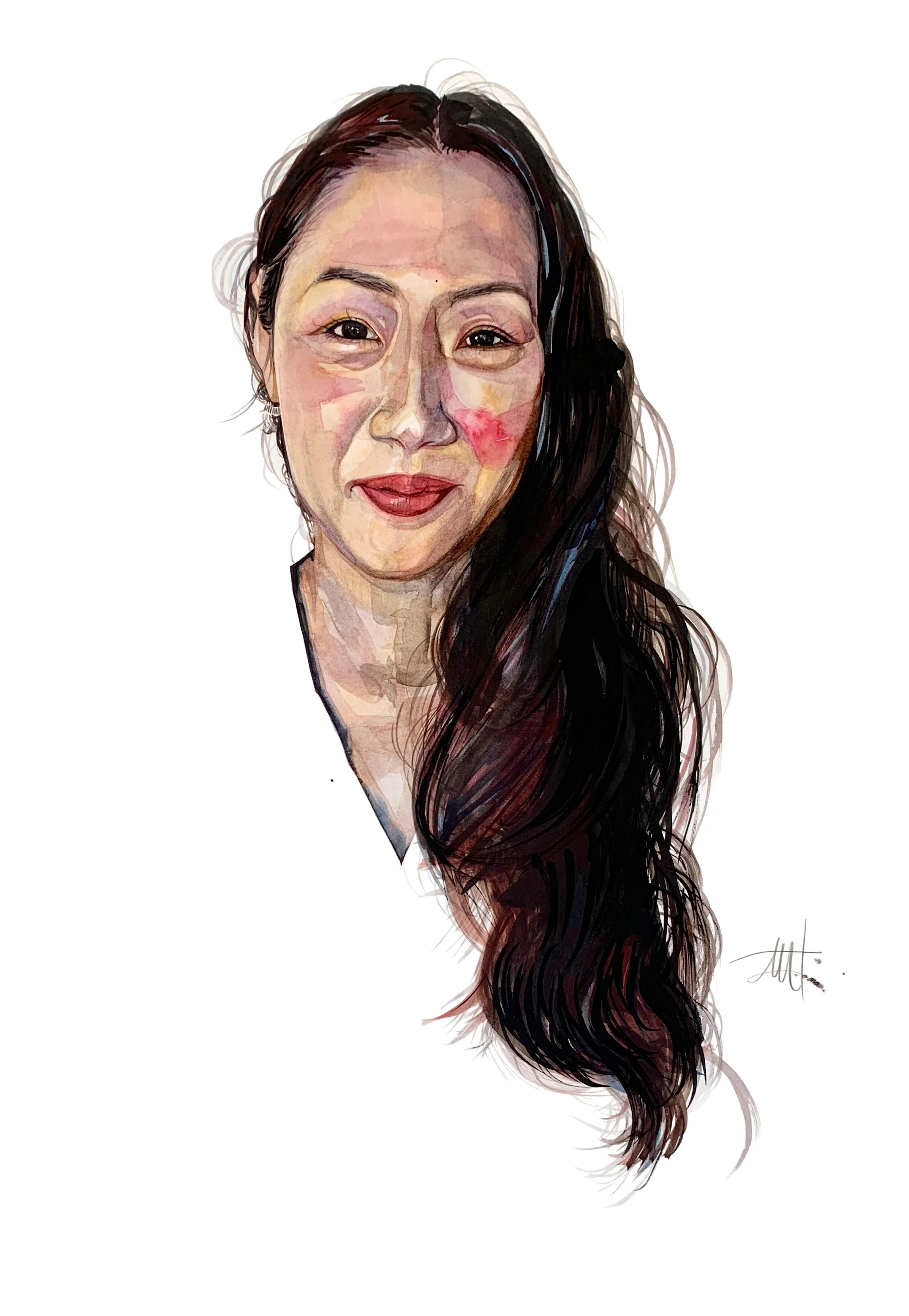
Watercolor on paper
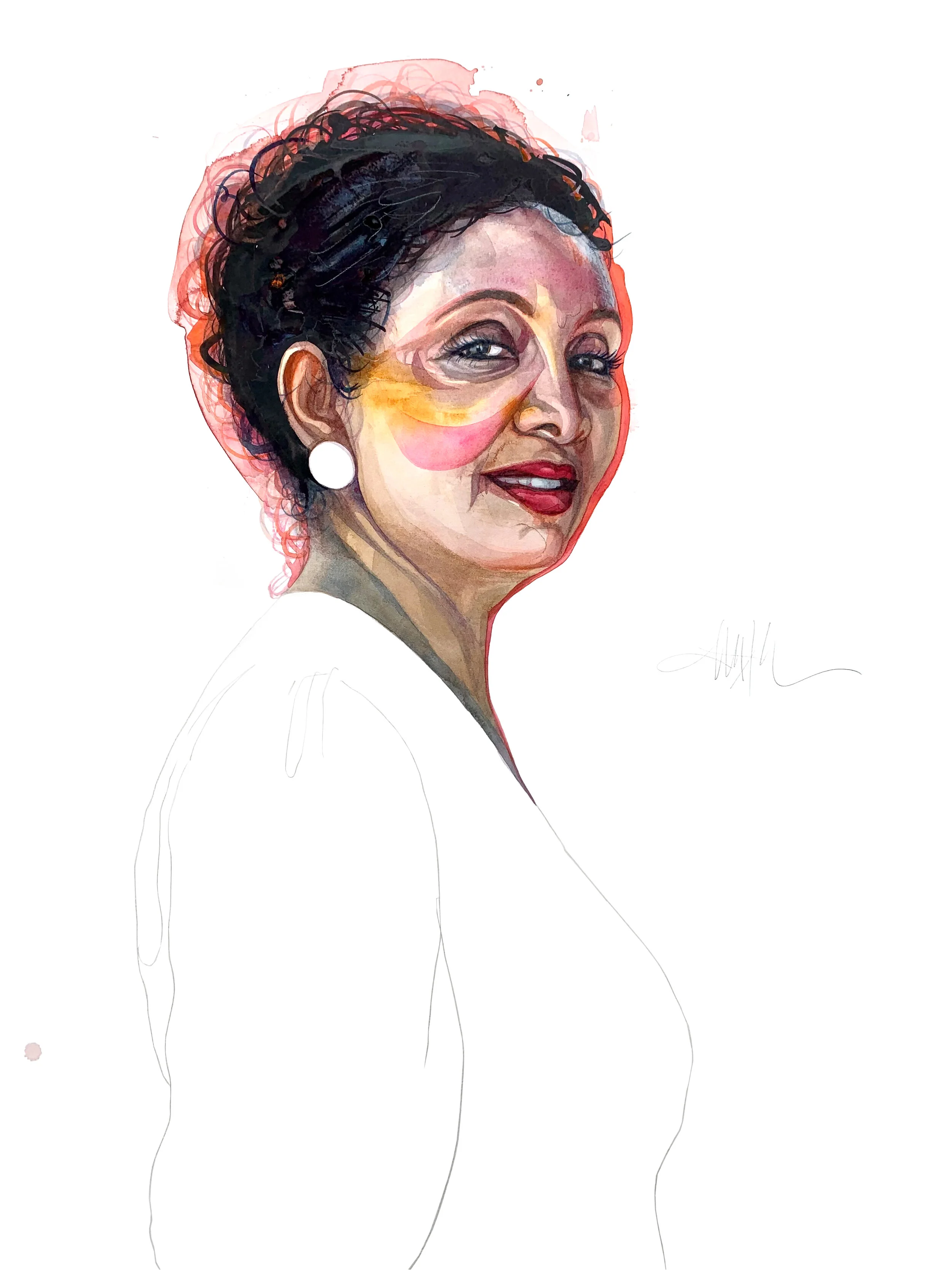
Watercolor on paper
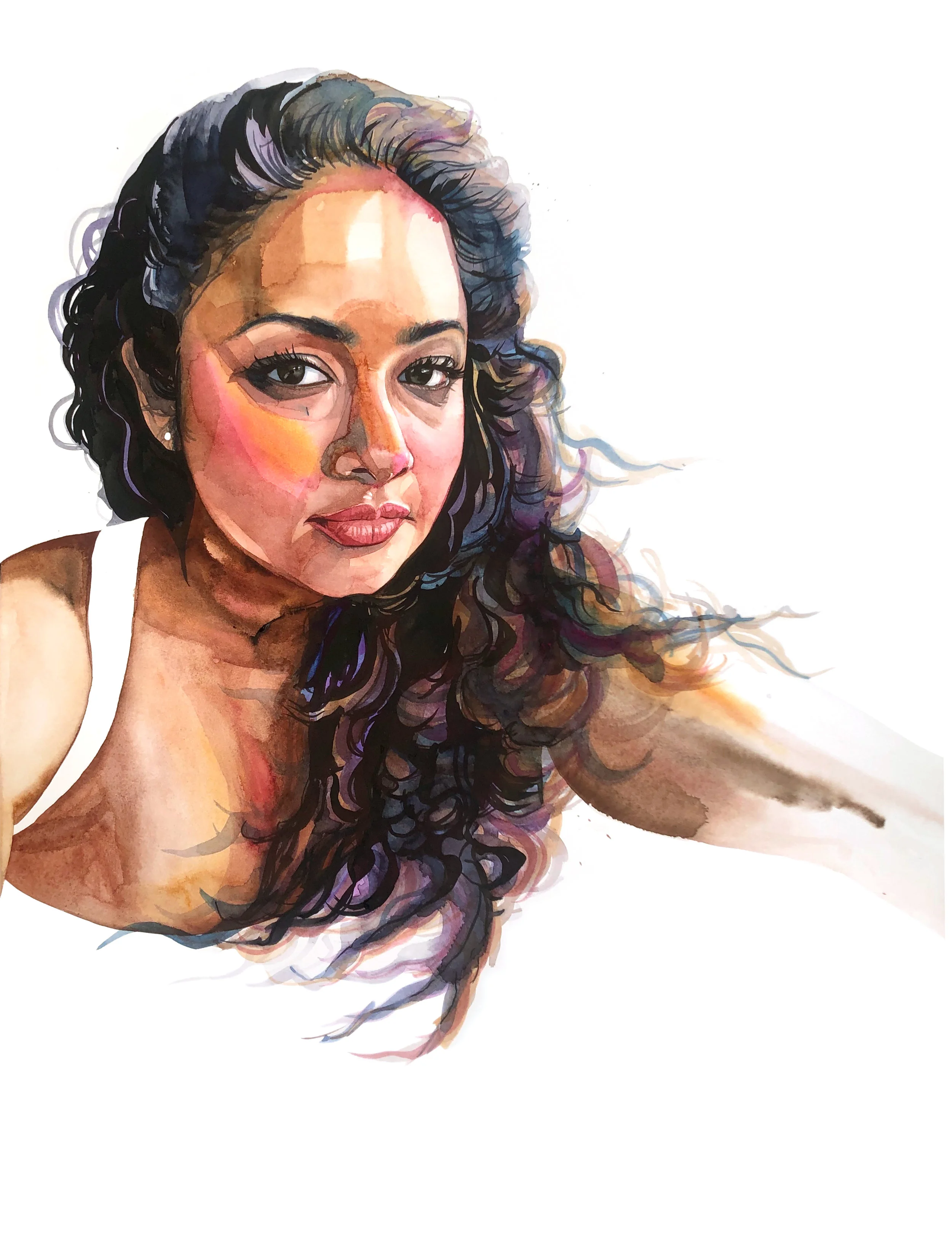
Watercolor on paper
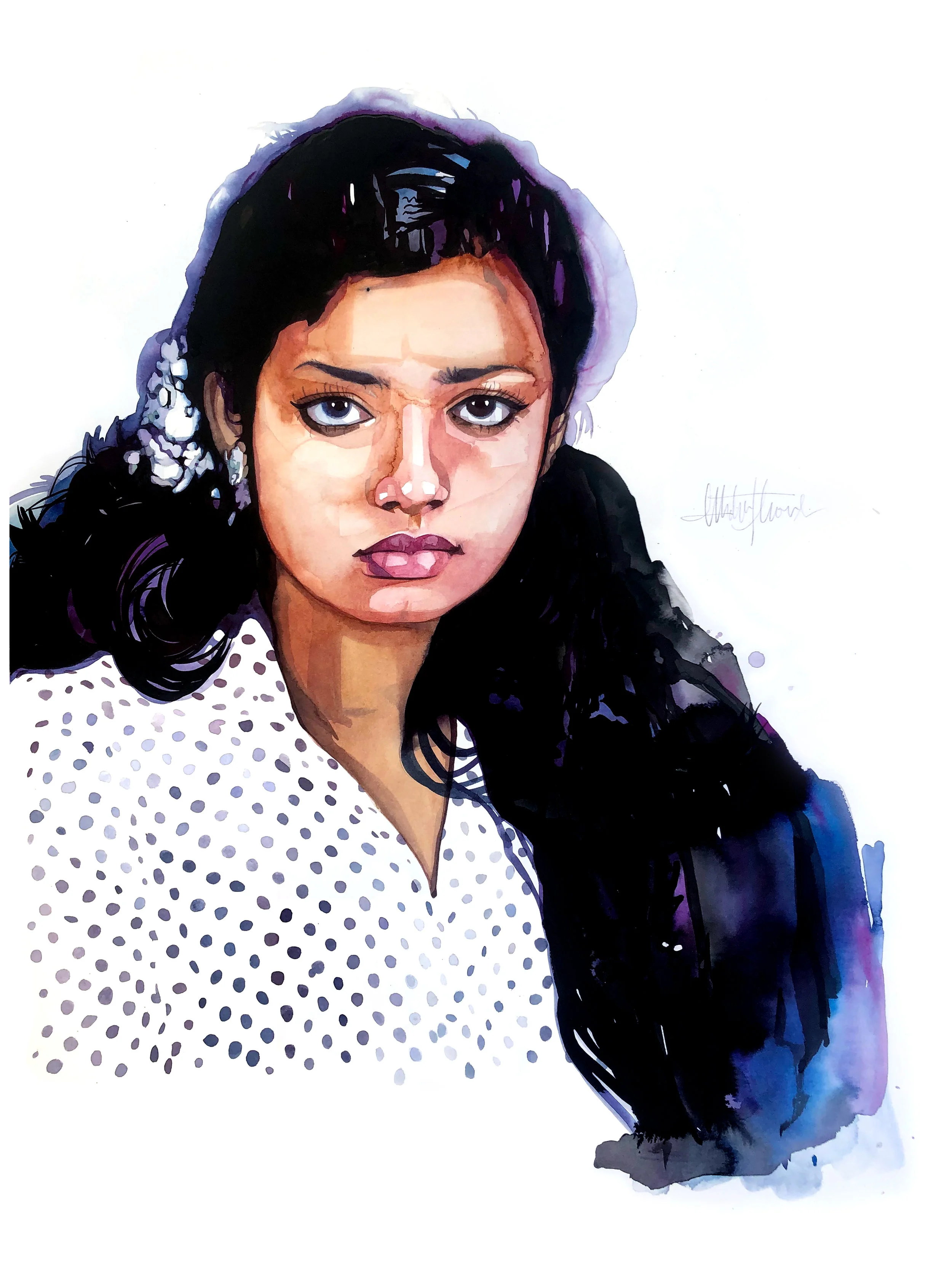
Watercolor on paper
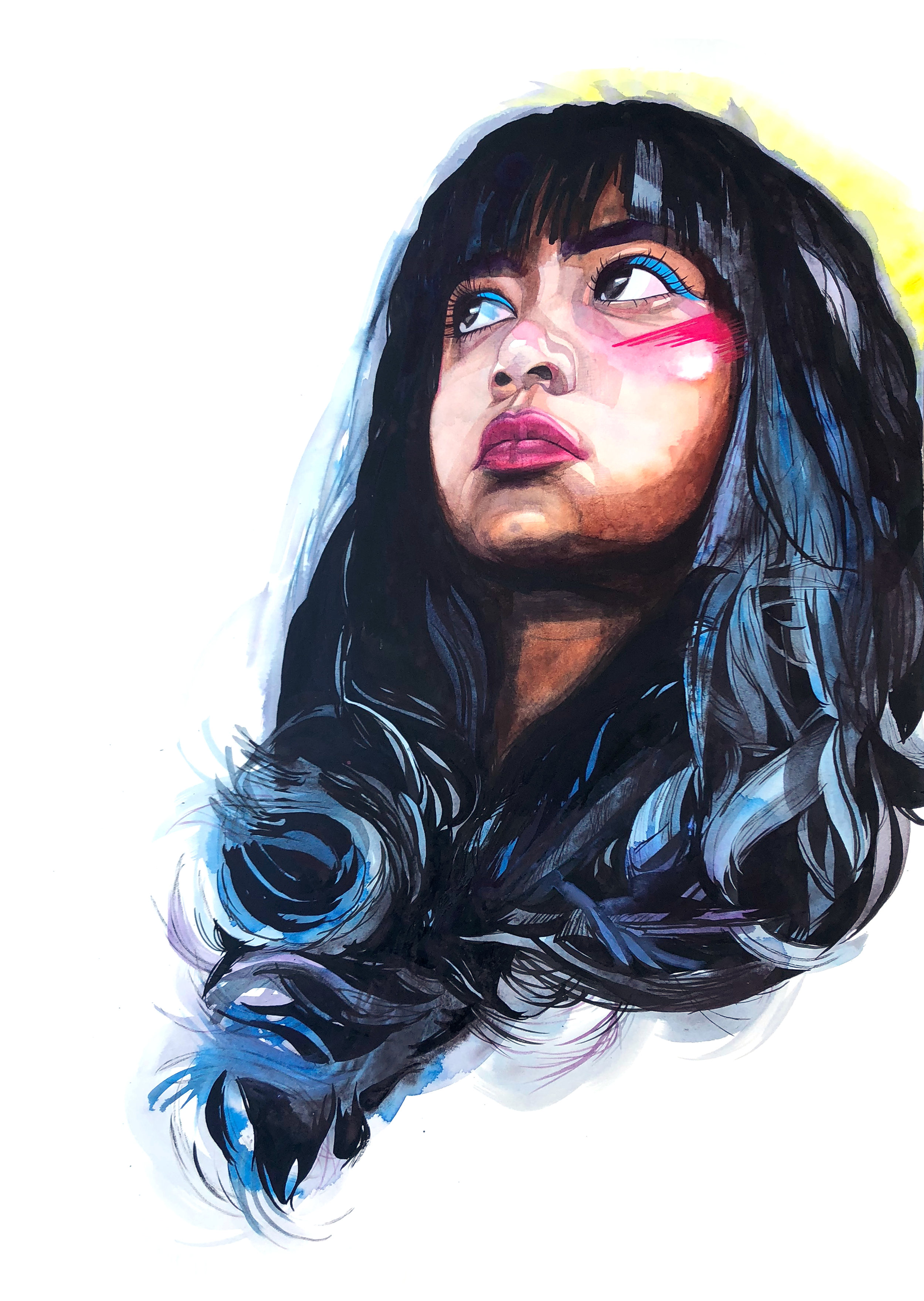
Watercolor on paper
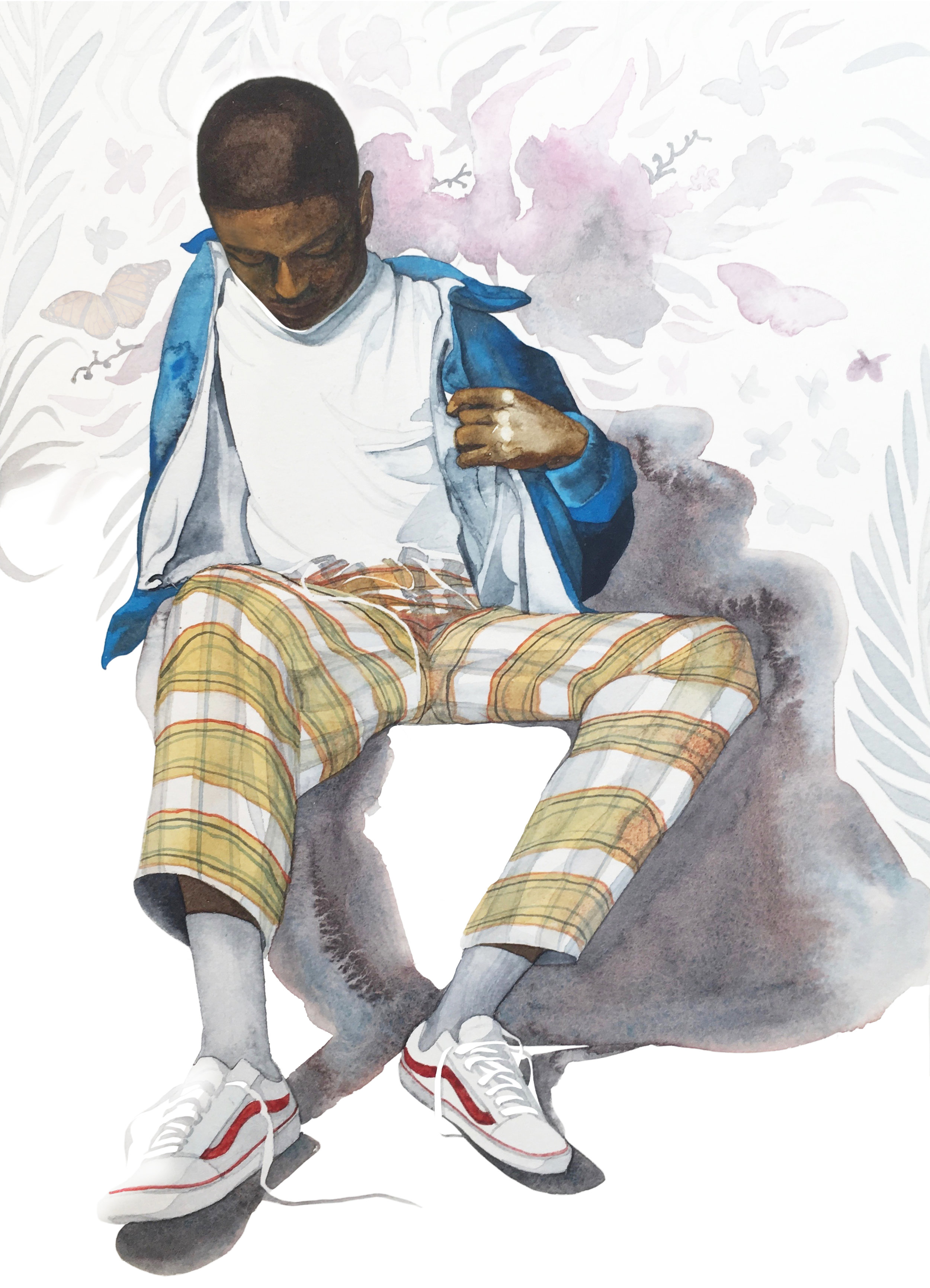
Watercolor on paper

Watercolor on paper
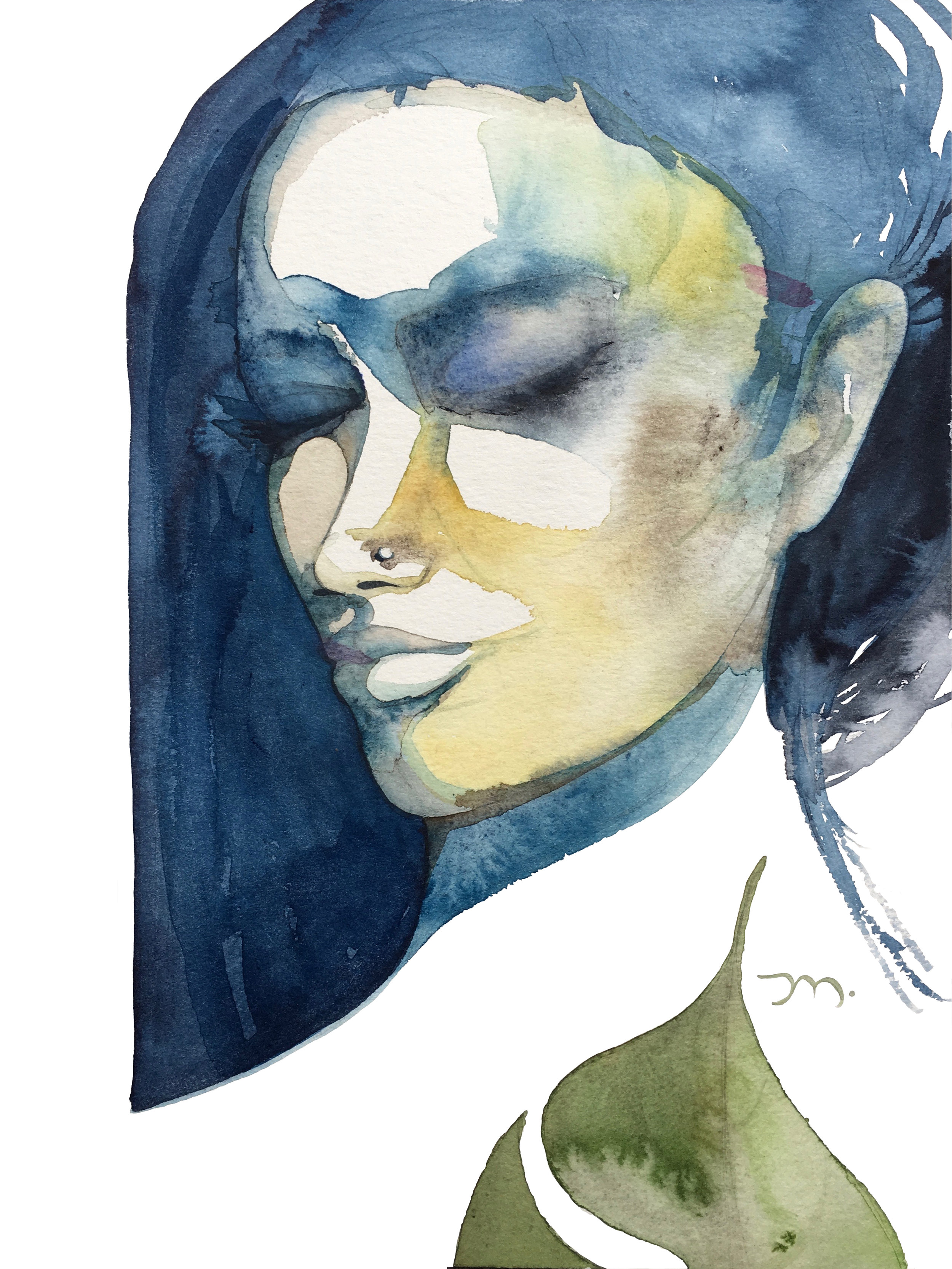
Watercolor on paper
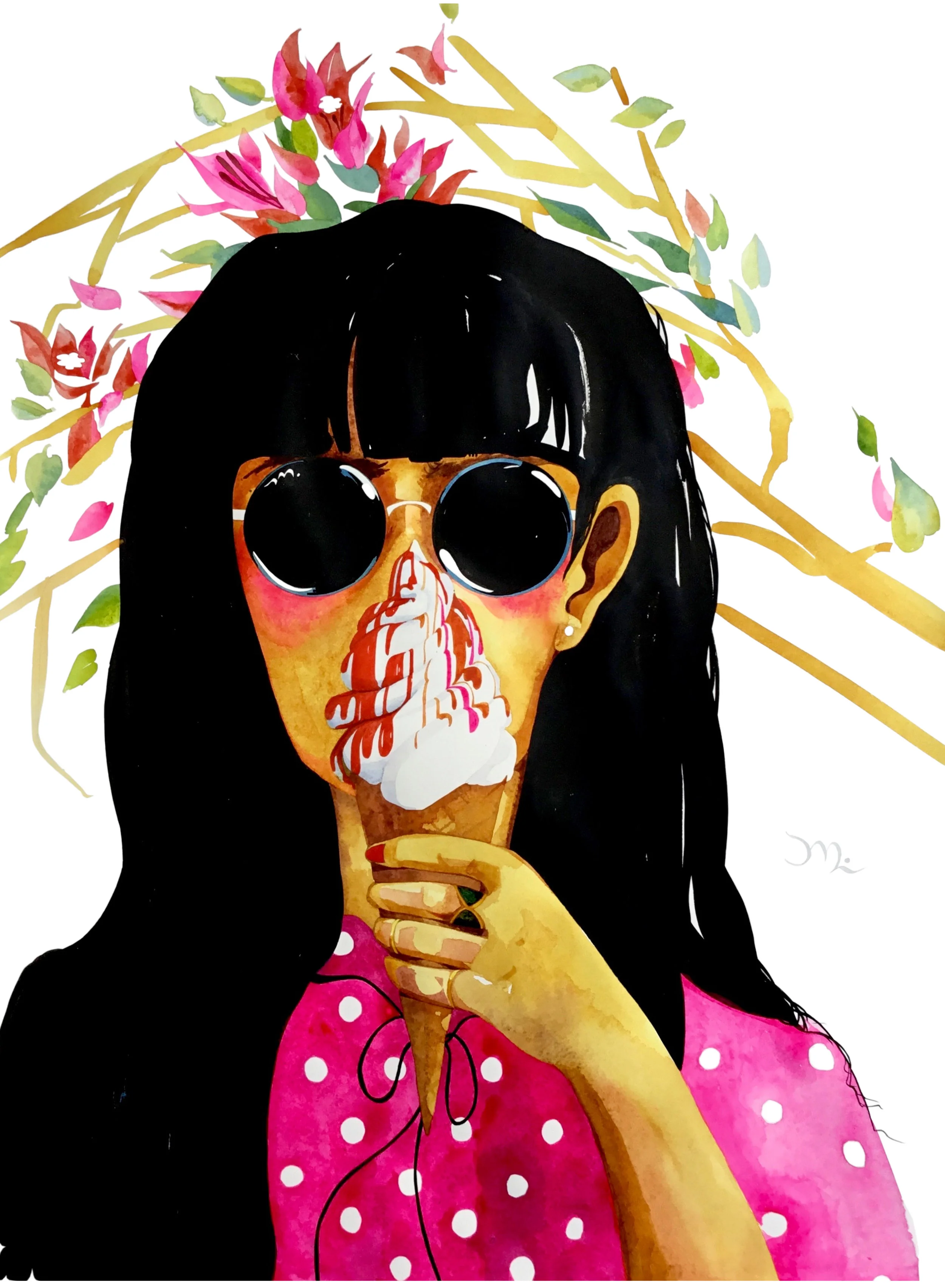
Watercolor on paper
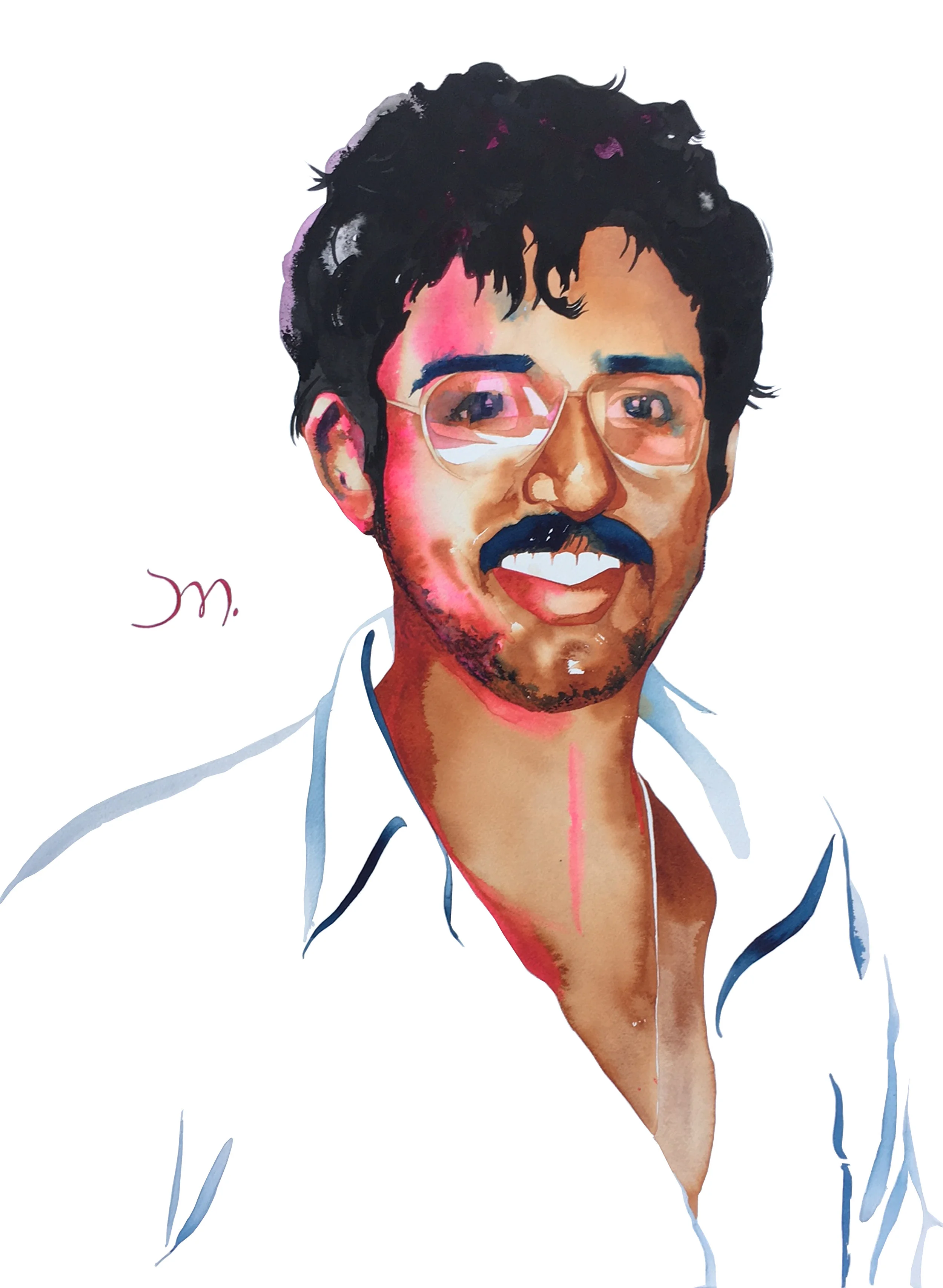
Watercolor on paper
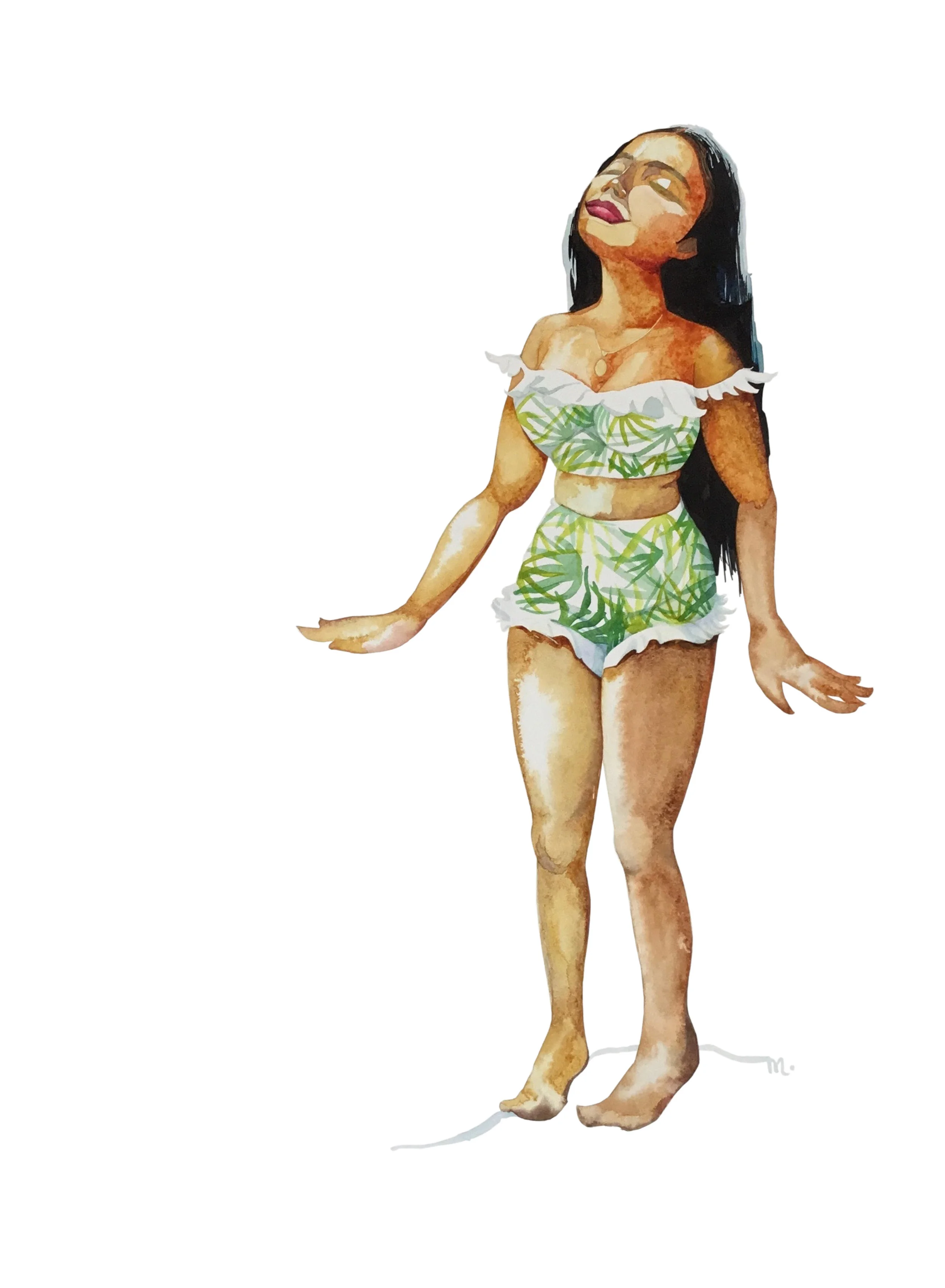
Watercolor on paper
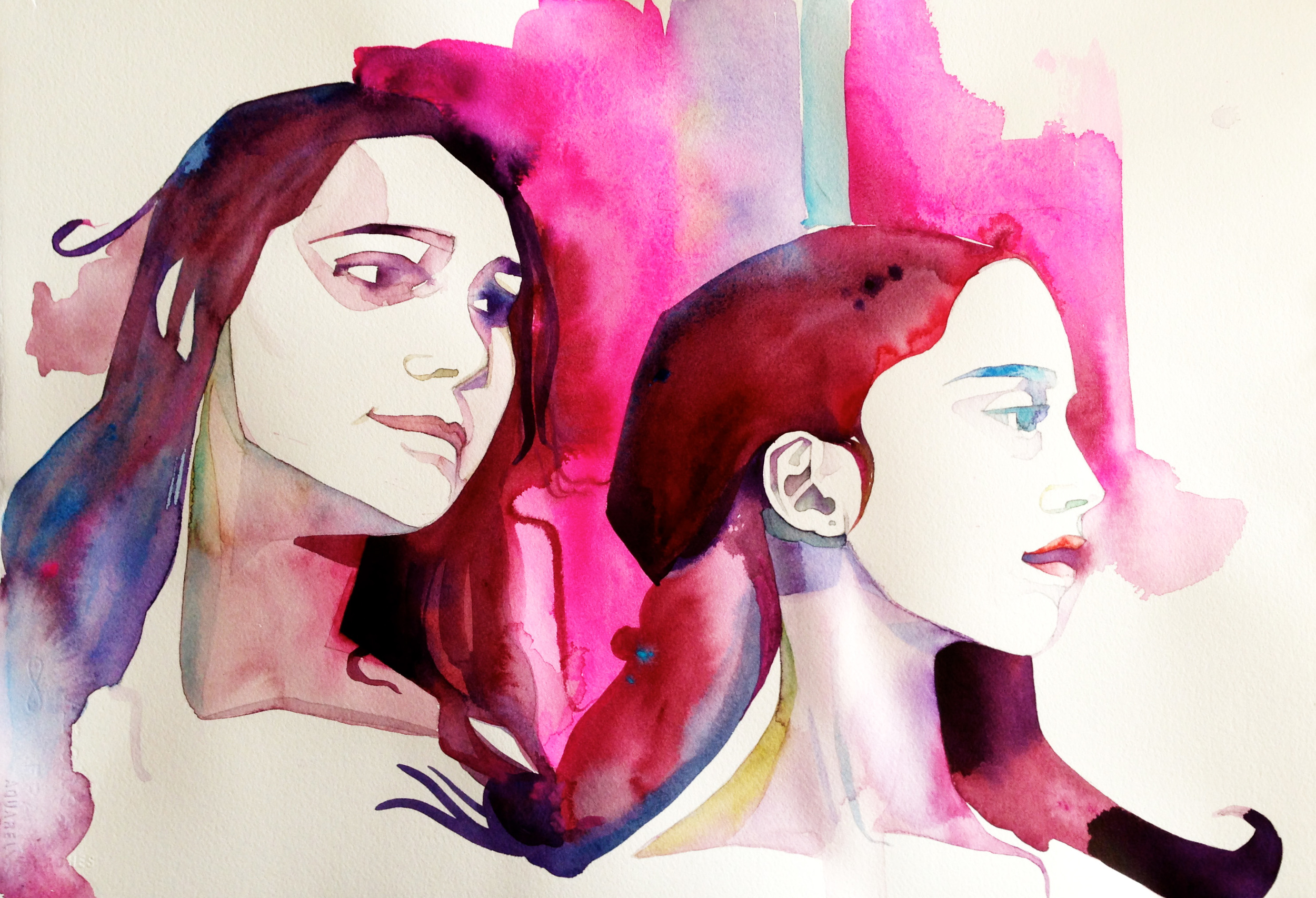
Watercolor on paper

Watercolor on paper
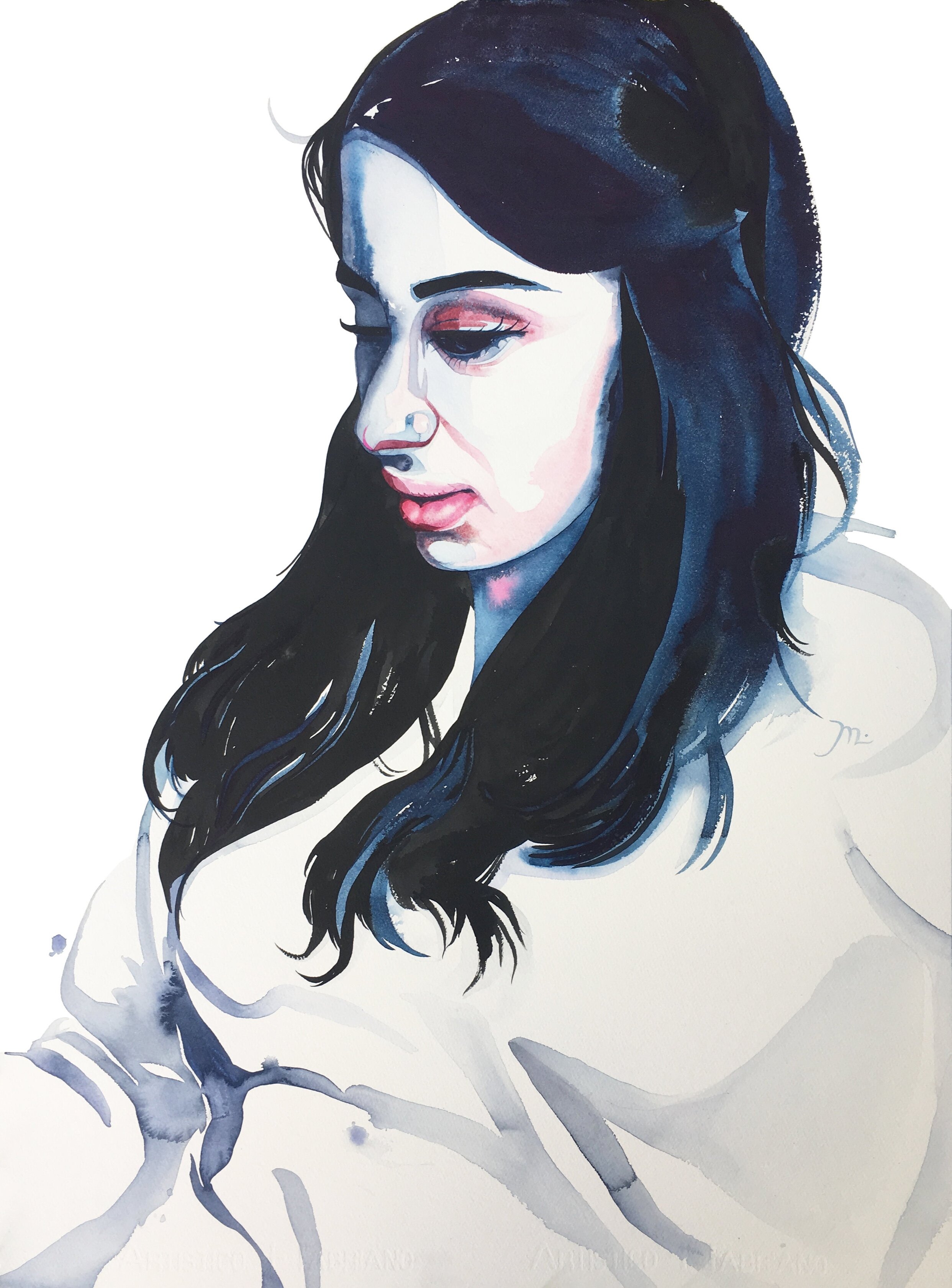
Watercolor on paper
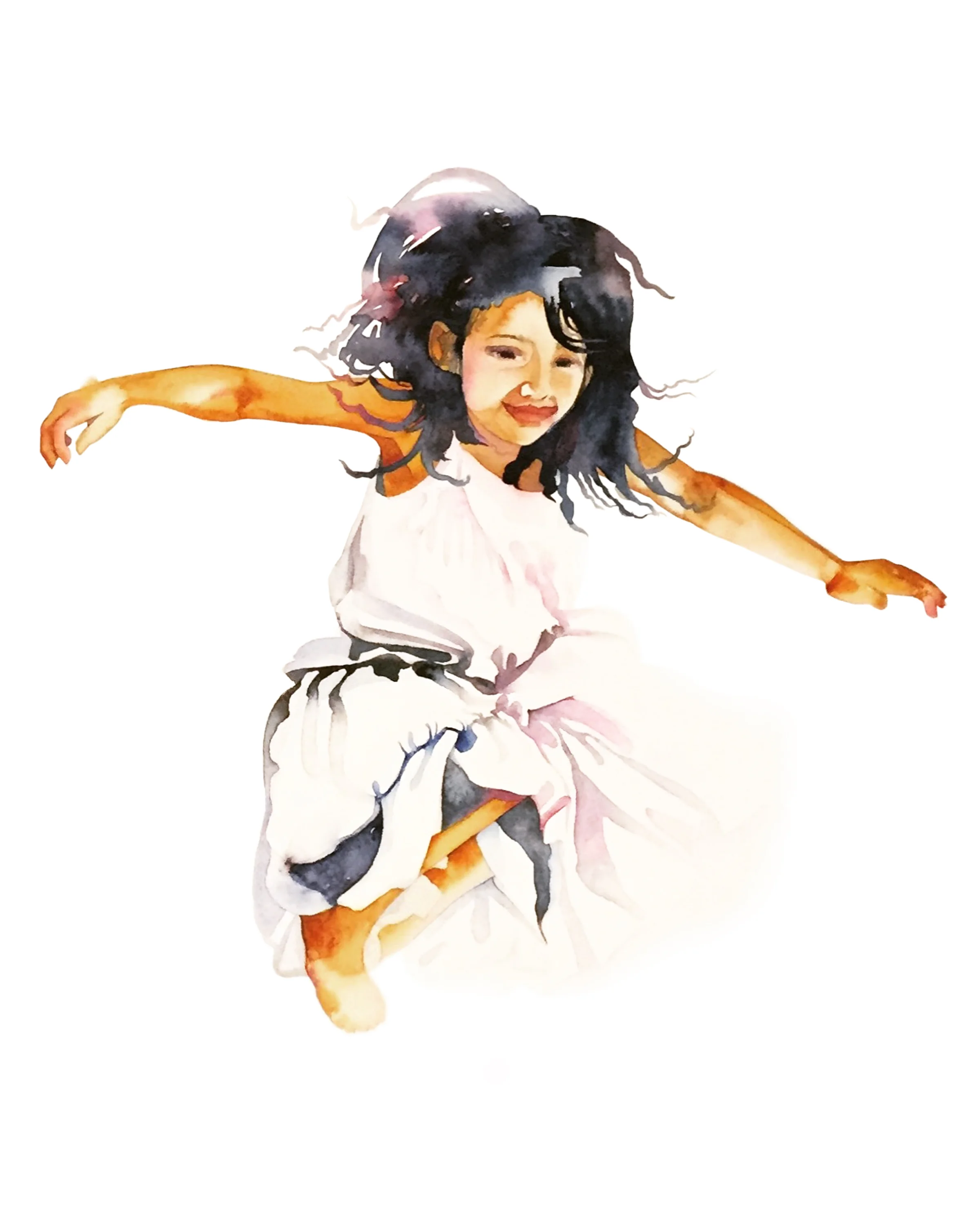
Watercolor on paper
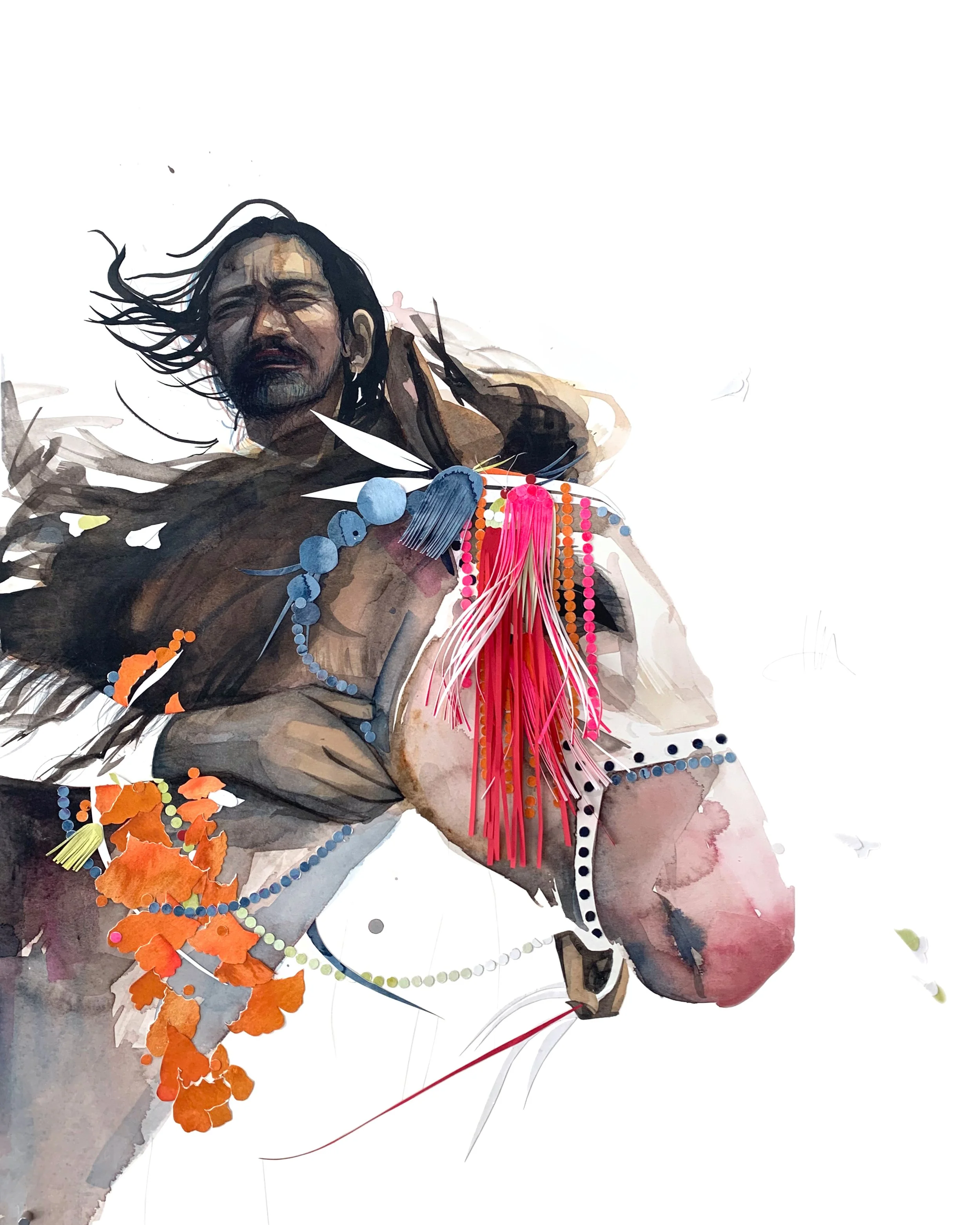
Watercolor collage on paper
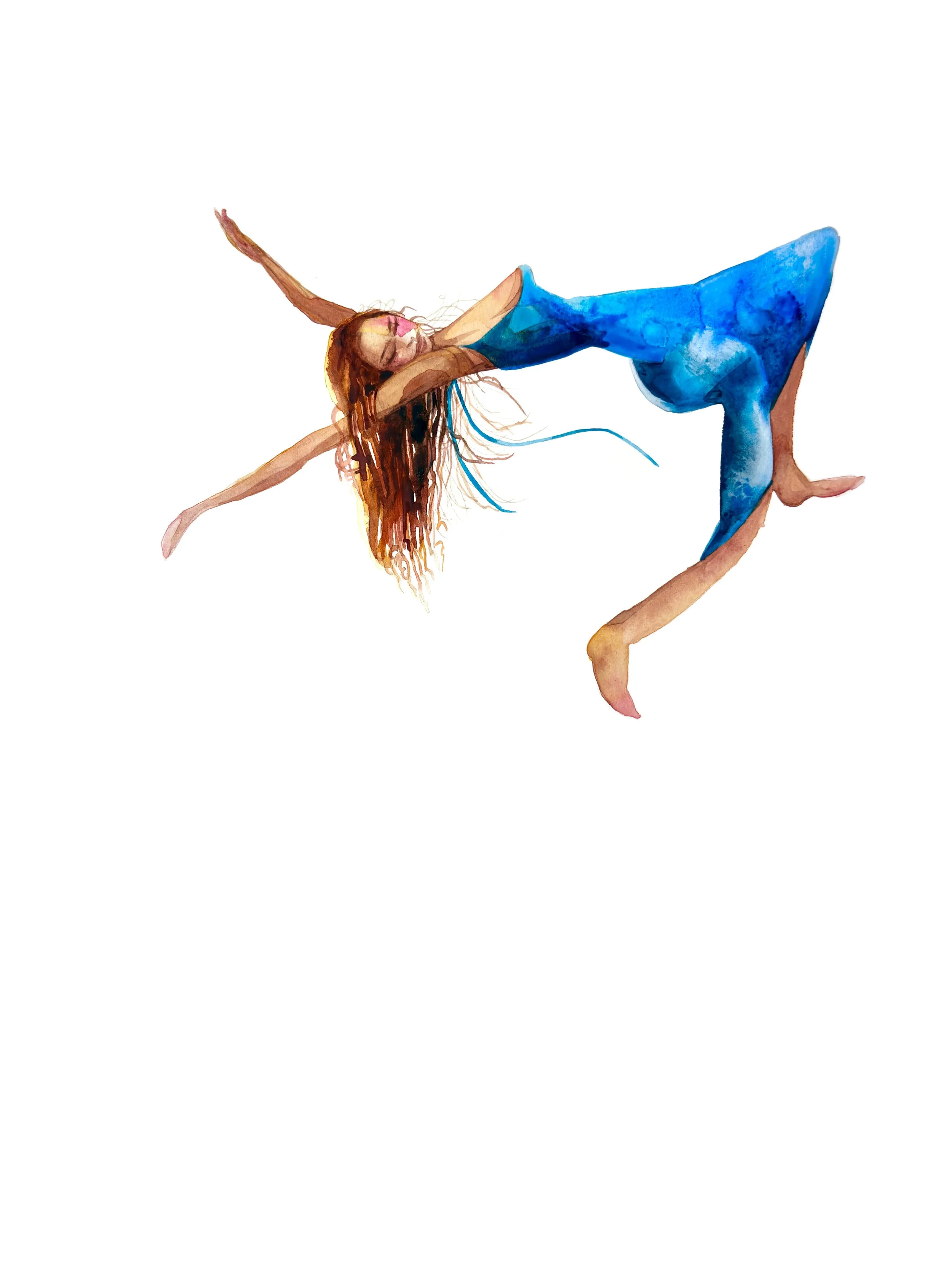
Surrender by Michelle Sindha Thomas
Watercolor on paper
12”x16”
SHOP
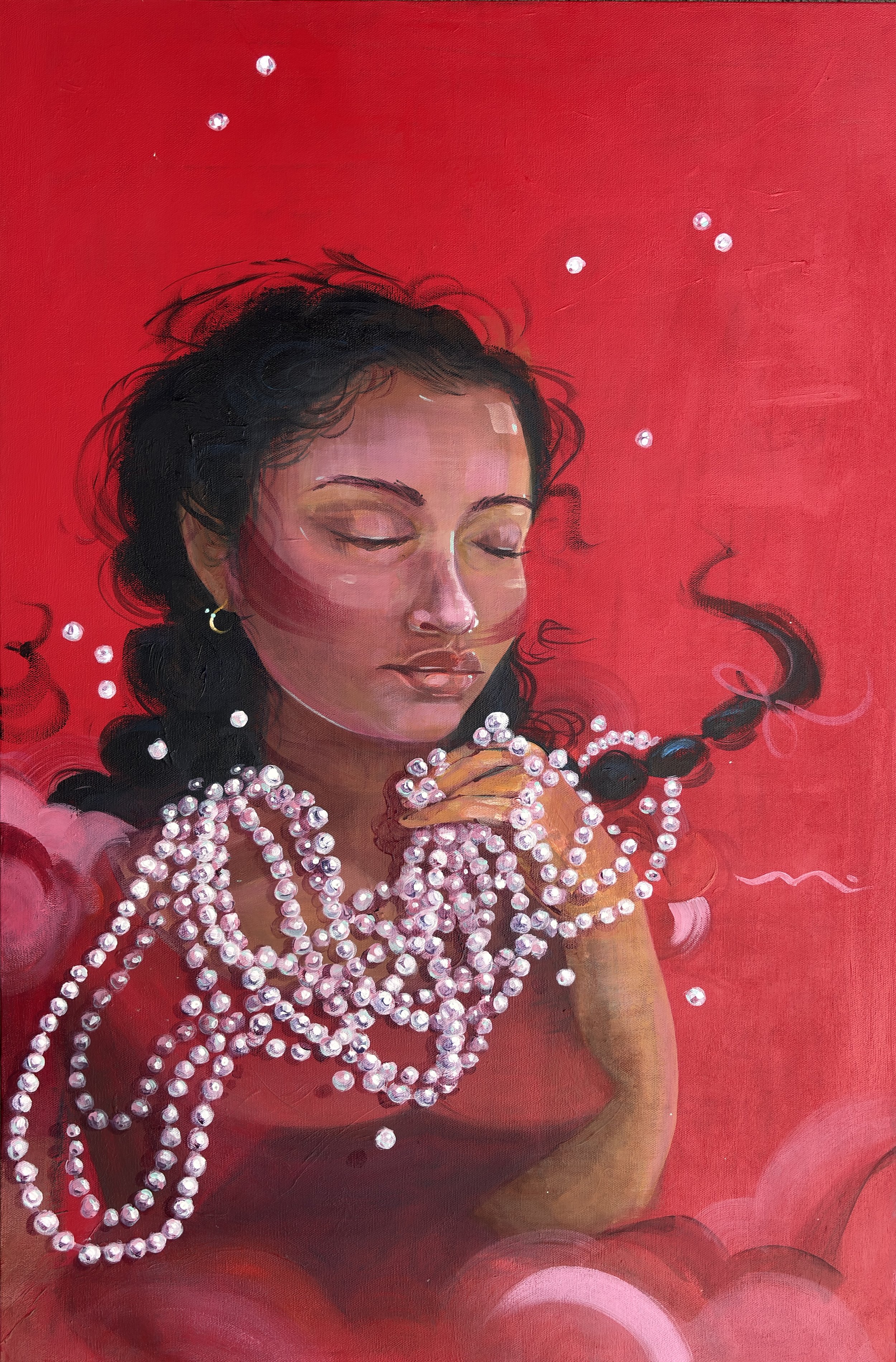
Clutching My Pearls
Michelle Sindha Thomas
Acrylic on canvas
22” x 36”
$2500